SpaceX prices record $75 billion IPO at $135 a share
Image Credit : Reuters
Source Credit : Portfolio Prints
SpaceX has made history by pricing the largest initial public offering (IPO) ever conducted in the United States, setting its share price at $135 and raising an unprecedented $75 billion. The offering values Elon Musk’s rocket, satellite, and artificial intelligence giant at approximately $1.77 trillion, instantly placing it among the world’s most valuable publicly traded companies and marking a defining moment for both Wall Street and the global technology sector.
The record-breaking IPO involved the sale of 555.56 million shares and surpassed the previous global record held by Saudi Aramco, which raised $25.6 billion in 2019. The successful offering caps a months-long process that challenged many traditional IPO conventions, reflecting Musk’s willingness to reshape financial norms just as he has disrupted the automotive, aerospace, and technology industries.
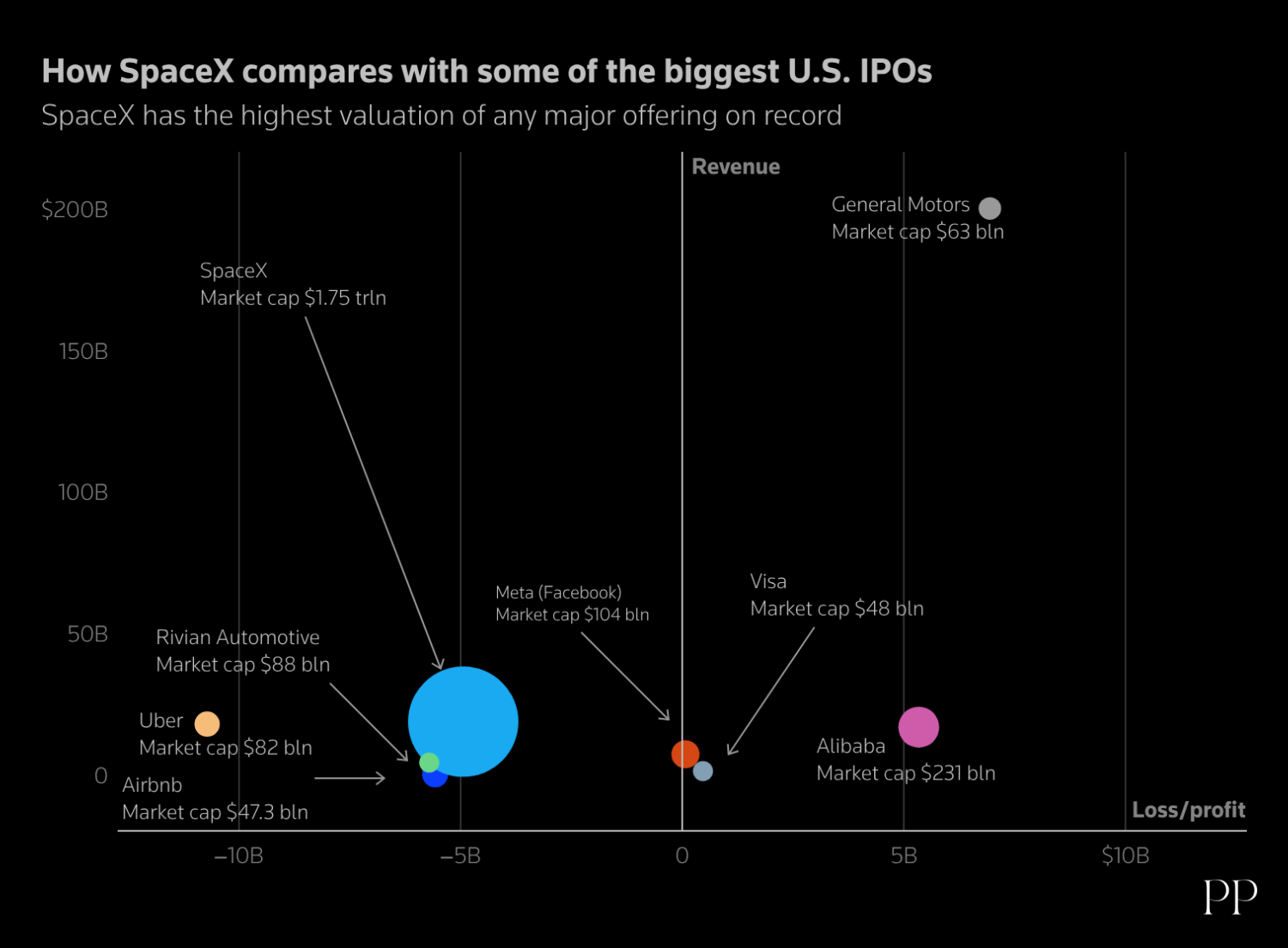
When trading begins on the Nasdaq, SpaceX will rank among the seven most valuable U.S.-listed companies, despite generating far less revenue than many of its mega-cap peers and posting a loss last year. The valuation places the company ahead of corporate giants such as JPMorgan Chase, Berkshire Hathaway, Eli Lilly, Meta Platforms, and even Musk’s own Tesla, underscoring investor confidence in SpaceX’s long-term growth potential rather than its current financial performance.
 Market analysts believe the true test of the IPO will come after the initial excitement fades. While strong demand from retail investors helped support the offering, experts caution that sustained momentum will depend on how the market evaluates the company’s ambitious growth plans and lofty valuation in the weeks and months ahead.
SpaceX’s debut has been notable not only for its size but also for the unconventional manner in which it was executed. The company allocated 30% of the offering to retail investors—an unusually high proportion for a major IPO—and announced its pricing before the traditional roadshow process had fully concluded. The move reflected Musk’s preference for controlling the narrative and conducting the offering largely on his own terms.
The company also maintained its founder-centric governance structure, ensuring that Musk retains overwhelming influence after the listing. Following the IPO, he will continue to control approximately 82% of the company’s voting power, allowing him to guide SpaceX’s long-term vision without significant interference from outside shareholders.
Founded in 2002, SpaceX has evolved from an ambitious private space venture into one of the most influential technology companies in the world. The company states that its mission is to make humanity a multiplanetary species, while simultaneously advancing scientific understanding and expanding human presence beyond Earth. According to SpaceX, its total addressable market spans an estimated $28.5 trillion, which it describes as the largest commercial opportunity in human history.
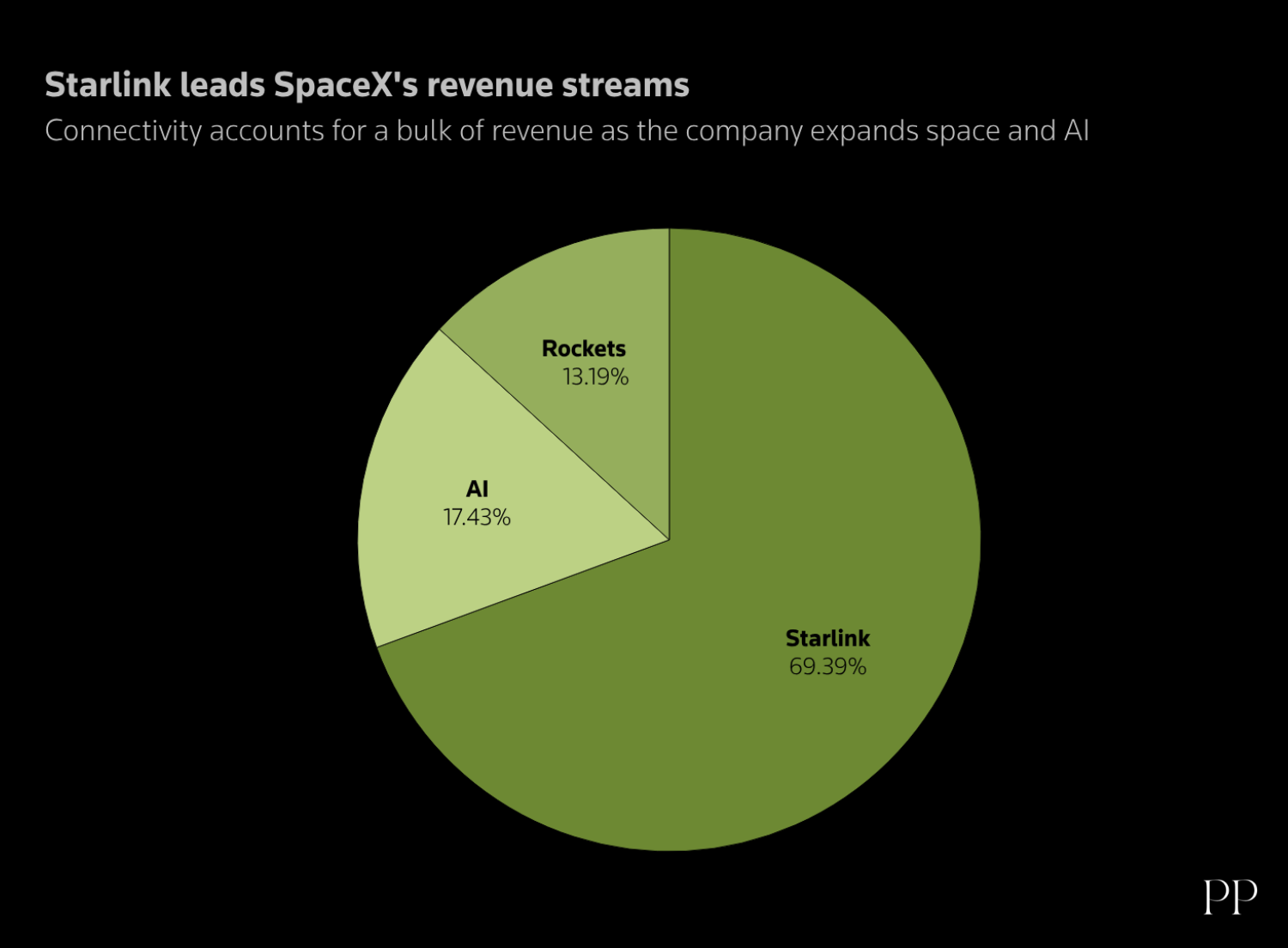
Today, SpaceX dominates the global launch industry, accounting for more than four-fifths of the total mass sent into orbit over the past three years. Its Starlink satellite internet network has become the company’s largest revenue generator, providing connectivity to millions of consumers, businesses, and government organizations across more than 160 countries and territories.
Beyond aerospace and communications, SpaceX is increasingly positioning itself as a major player in artificial intelligence. The company argues that the integration of xAI, its computing infrastructure, and the vast real-time data generated through X creates a unique strategic advantage in the rapidly evolving AI landscape. While competitors such as OpenAI and Anthropic currently lead many areas of AI development, SpaceX believes its combination of data, computing power, and infrastructure could become a powerful differentiator in the years ahead.
Market analysts believe the true test of the IPO will come after the initial excitement fades. While strong demand from retail investors helped support the offering, experts caution that sustained momentum will depend on how the market evaluates the company’s ambitious growth plans and lofty valuation in the weeks and months ahead.
SpaceX’s debut has been notable not only for its size but also for the unconventional manner in which it was executed. The company allocated 30% of the offering to retail investors—an unusually high proportion for a major IPO—and announced its pricing before the traditional roadshow process had fully concluded. The move reflected Musk’s preference for controlling the narrative and conducting the offering largely on his own terms.
The company also maintained its founder-centric governance structure, ensuring that Musk retains overwhelming influence after the listing. Following the IPO, he will continue to control approximately 82% of the company’s voting power, allowing him to guide SpaceX’s long-term vision without significant interference from outside shareholders.
Founded in 2002, SpaceX has evolved from an ambitious private space venture into one of the most influential technology companies in the world. The company states that its mission is to make humanity a multiplanetary species, while simultaneously advancing scientific understanding and expanding human presence beyond Earth. According to SpaceX, its total addressable market spans an estimated $28.5 trillion, which it describes as the largest commercial opportunity in human history.
Today, SpaceX dominates the global launch industry, accounting for more than four-fifths of the total mass sent into orbit over the past three years. Its Starlink satellite internet network has become the company’s largest revenue generator, providing connectivity to millions of consumers, businesses, and government organizations across more than 160 countries and territories.
Beyond aerospace and communications, SpaceX is increasingly positioning itself as a major player in artificial intelligence. The company argues that the integration of xAI, its computing infrastructure, and the vast real-time data generated through X creates a unique strategic advantage in the rapidly evolving AI landscape. While competitors such as OpenAI and Anthropic currently lead many areas of AI development, SpaceX believes its combination of data, computing power, and infrastructure could become a powerful differentiator in the years ahead.
 Nevertheless, significant challenges remain. Critics argue that the company’s valuation relies heavily on future growth assumptions rather than present-day earnings, while others point to its dependence on government contracts and subsidies. Investors are effectively betting on SpaceX’s ability to transform industries ranging from telecommunications and artificial intelligence to space transportation and planetary exploration.
Competitive pressures are also intensifying. Rivals such as Blue Origin, founded by Jeff Bezos, are accelerating efforts to commercialize space, secure government contracts, and develop next-generation launch systems. As more private companies enter the sector, SpaceX will need to maintain its technological edge while expanding into new markets beyond Earth.
The IPO also arrives at a pivotal moment for the broader U.S. capital markets. After several years of subdued activity and market volatility, analysts expect a strong resurgence in public offerings, with investment banks forecasting record fundraising levels in 2026. Alongside SpaceX, highly anticipated listings from leading artificial intelligence companies could further fuel investor enthusiasm and reshape the technology investment landscape.
As trading begins, market participants will closely watch how investors respond to one of the most anticipated public offerings in modern financial history. A moderate first-day gain would signal confidence in the company’s fundamentals, while an explosive surge could indicate that enthusiasm and speculation are driving the stock. Regardless of its immediate performance, SpaceX’s debut represents a landmark event that could redefine how future technology giants approach public markets.
With a valuation approaching $2 trillion, dominant positions in space launches and satellite communications, growing ambitions in artificial intelligence, and a mission extending beyond Earth itself, SpaceX enters public markets not merely as a company, but as one of the boldest and most ambitious bets on the future ever offered to investors.
Nevertheless, significant challenges remain. Critics argue that the company’s valuation relies heavily on future growth assumptions rather than present-day earnings, while others point to its dependence on government contracts and subsidies. Investors are effectively betting on SpaceX’s ability to transform industries ranging from telecommunications and artificial intelligence to space transportation and planetary exploration.
Competitive pressures are also intensifying. Rivals such as Blue Origin, founded by Jeff Bezos, are accelerating efforts to commercialize space, secure government contracts, and develop next-generation launch systems. As more private companies enter the sector, SpaceX will need to maintain its technological edge while expanding into new markets beyond Earth.
The IPO also arrives at a pivotal moment for the broader U.S. capital markets. After several years of subdued activity and market volatility, analysts expect a strong resurgence in public offerings, with investment banks forecasting record fundraising levels in 2026. Alongside SpaceX, highly anticipated listings from leading artificial intelligence companies could further fuel investor enthusiasm and reshape the technology investment landscape.
As trading begins, market participants will closely watch how investors respond to one of the most anticipated public offerings in modern financial history. A moderate first-day gain would signal confidence in the company’s fundamentals, while an explosive surge could indicate that enthusiasm and speculation are driving the stock. Regardless of its immediate performance, SpaceX’s debut represents a landmark event that could redefine how future technology giants approach public markets.
With a valuation approaching $2 trillion, dominant positions in space launches and satellite communications, growing ambitions in artificial intelligence, and a mission extending beyond Earth itself, SpaceX enters public markets not merely as a company, but as one of the boldest and most ambitious bets on the future ever offered to investors.