Alibaba Group seeks $10.2 billion to fund AI
Image Credit : Bloomberg
Source Credit : Portfolio Prints
Alibaba shares fell sharply in Hong Kong on Monday after the Chinese technology giant launched a $10.2 billion share sale at a steep discount to fund its growing artificial intelligence ambitions, raising concerns among investors about dilution, execution risks and the company’s ability to turn heavy AI spending into sustainable returns.
Alibaba said it would issue HK$80 billion ($10.2 billion) of new shares at HK$112.70 each, representing an 8.4% discount to Friday’s closing price. The proceeds will be used to finance AI infrastructure, advanced computing chips and the development of AI models.
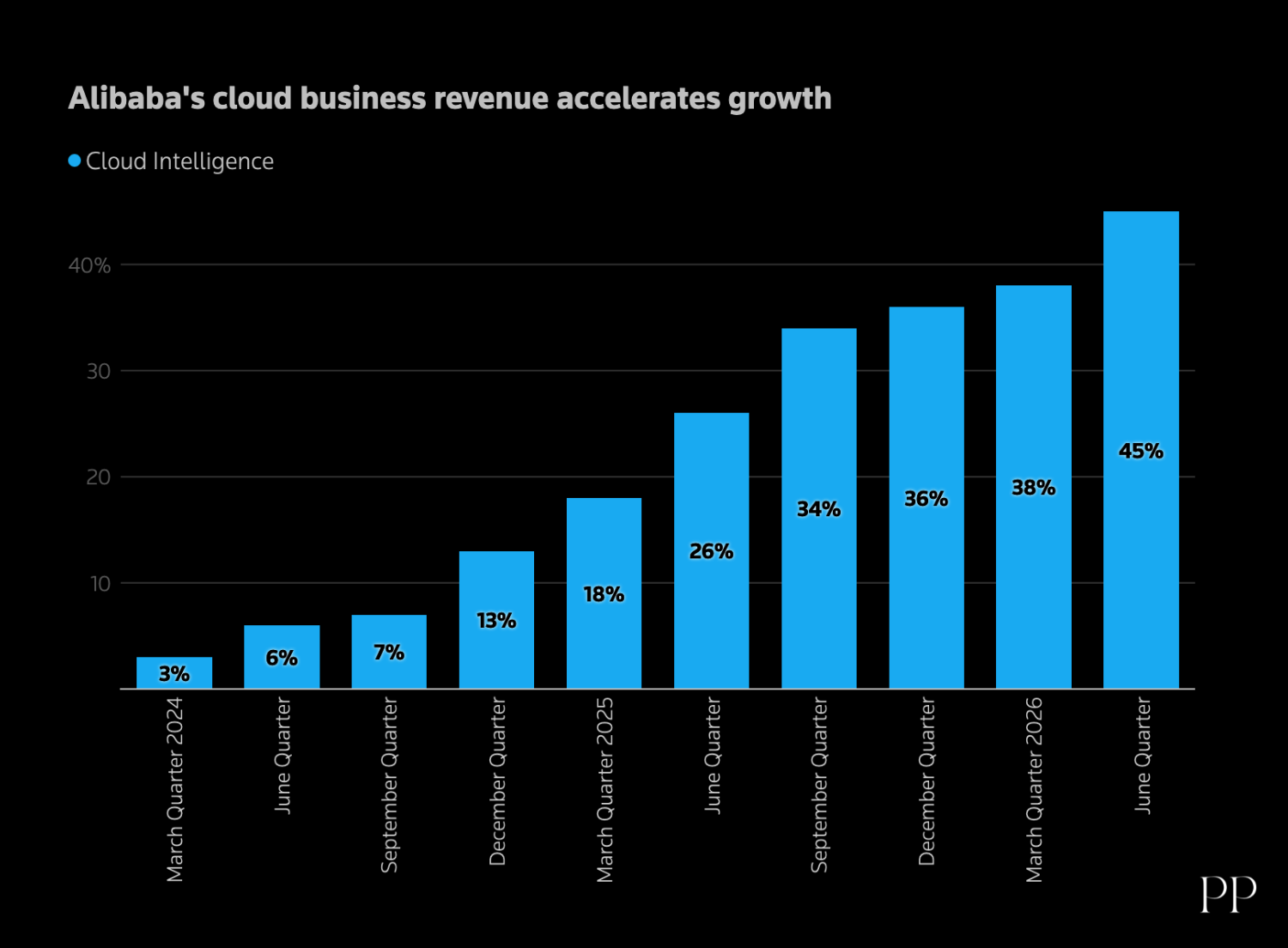
The fundraising comes as AI becomes an increasingly important source of growth for Alibaba. While its traditional e-commerce business faces slower expansion, its cloud division and Qwen family of AI models have emerged as major strategic priorities. However, investors remain divided over whether Alibaba can successfully compete with China’s leading technology companies in advanced AI.
“Alibaba’s DNA is in e-commerce, not advanced tech,” said Yang Tingwu, vice general manager of asset manager Tongheng Investment. He argued that simply increasing spending on AI hardware may not be enough for Alibaba to match competitors in technological innovation.
Alibaba’s Hong Kong-listed shares initially fell as much as 10.5% before recovering some of their losses later in the session. The stock eventually traded broadly around the discounted placement price.
The company is selling approximately 710 million ordinary shares, equivalent to 3.6% of its enlarged share capital. Although the deal creates dilution for existing shareholders, investor demand was strong. The offering reportedly attracted around $28 billion in orders, including approximately $6 billion from long-only and sovereign investors.
Around 40% of the offering is expected to be allocated to long-only institutional and sovereign investors, including major sovereign wealth funds from Europe, Asia and the Middle East. Investors reportedly included the Qatar Investment Authority, Norway’s Norges Bank Investment Management and Hillhouse.
The strong demand suggests that large global investors continue to see Alibaba as an important player in China’s technology and AI ecosystem despite geopolitical tensions and concerns surrounding the company’s aggressive spending plans.
Alibaba’s senior executives also demonstrated confidence in the company’s strategy. Chairman Joe Tsai purchased 720,000 Hong Kong shares at an average price of HK$112 each, while Chief Executive Eddie Wu bought 350,000 shares at an average price of HK$111.60, according to stock exchange disclosures.
The share sale highlights the enormous capital requirements emerging from the global AI race. As the United States and China compete for technological leadership, technology companies are committing increasingly large amounts of capital to AI models, computing infrastructure and data centres.
 Chinese technology companies, however, continue to spend substantially less than their largest U.S. counterparts. Capital Group estimates that AI-related capital expenditure by Microsoft, Amazon, Alphabet, Meta and Oracle reached approximately $791 billion as of July 31. By comparison, ByteDance, Alibaba, Tencent and Baidu accounted for around $118 billion.
A major reason for the gap is China’s restricted access to Nvidia’s most advanced AI chips because of U.S. export controls. These restrictions have forced Chinese companies to focus heavily on developing more efficient models, proprietary chips and infrastructure that can deliver competitive performance with fewer computing resources.
Alibaba’s fundraising also comes at a challenging moment for its financial performance. Just a week earlier, the company reported that quarterly net profit had plunged 75% from a year earlier, largely reflecting higher investment in AI.
The company has nevertheless made AI central to its long-term strategy. Earlier this year, Alibaba separated its AI operations from its cloud business, with CEO Eddie Wu taking leadership of the new AI-focused unit.
Alibaba is pursuing several avenues to strengthen its position in the sector. These include expanding AI services for businesses in China, preparing a potential listing of its semiconductor subsidiary T-Head and developing AI agents capable of connecting services across its broader ecosystem, including e-commerce, food delivery, travel and entertainment.
The company has also been involved in developing a large language model that Apple is expected to use for AI services in the Chinese market, according to people familiar with the matter.
At its latest earnings announcement, Alibaba said it had already committed nearly half of its three-year capital expenditure plan of 380 billion yuan ($56.5 billion). Management has argued that investments in AI computing have a high probability of generating returns and expects the spending to break even within three years, potentially in as little as two and a half years.
The company expects improving margins and greater use of proprietary chips to help reduce the cost of AI infrastructure over time.
Alibaba’s share sale is significant not only because of its size but also because it demonstrates how the AI investment boom is changing corporate financing. The HK$80 billion offering is the largest follow-on issuance of new shares by a Hong Kong-listed company and one of the largest technology-related equity raises globally this year.
The timing is also notable. Alibaba’s fundraising comes alongside major capital-raising efforts by U.S. technology companies such as Alphabet and Intel, highlighting the increasingly similar investment strategies being adopted by American and Chinese tech giants.
“Alibaba’s placement — landing alongside massive capital raises by Alphabet and Intel in the U.S. — proves that American and Chinese tech giants are operating off the exact same strategic playbook,” said Winston Ma, an adjunct professor at NYU School of Law and former head of North America for China Investment Corporation.
The participation of sovereign investors also illustrates how global capital is approaching the U.S.-China technology rivalry. Rather than completely avoiding Chinese technology companies because of geopolitical tensions, some institutional investors appear willing to invest selectively in areas such as cloud computing and open-weight AI models.
For Alibaba, however, the biggest challenge will be proving that its enormous AI investment can generate sufficient returns.
The company is effectively making a high-stakes bet that AI can become the next major growth engine for its business as traditional e-commerce matures. The $10.2 billion share sale provides Alibaba with additional capital to accelerate that strategy, but it also increases the pressure on management to deliver results.
For shareholders, the immediate cost is dilution. The longer-term question is whether the additional capital will create enough growth and profitability to compensate for it.
Alibaba’s AI strategy therefore represents both an opportunity and a risk. If its Qwen models, cloud infrastructure, proprietary chips and AI-powered ecosystem succeed, the company could establish itself as one of China’s leading AI platforms. If execution falls short, however, the massive investment could weigh on profitability without producing the expected growth.
The market’s reaction to the share sale reflects precisely that uncertainty: investors recognize the scale of the AI opportunity, but they are demanding evidence that Alibaba can convert unprecedented levels of spending into sustainable competitive advantages and long-term shareholder value.
Chinese technology companies, however, continue to spend substantially less than their largest U.S. counterparts. Capital Group estimates that AI-related capital expenditure by Microsoft, Amazon, Alphabet, Meta and Oracle reached approximately $791 billion as of July 31. By comparison, ByteDance, Alibaba, Tencent and Baidu accounted for around $118 billion.
A major reason for the gap is China’s restricted access to Nvidia’s most advanced AI chips because of U.S. export controls. These restrictions have forced Chinese companies to focus heavily on developing more efficient models, proprietary chips and infrastructure that can deliver competitive performance with fewer computing resources.
Alibaba’s fundraising also comes at a challenging moment for its financial performance. Just a week earlier, the company reported that quarterly net profit had plunged 75% from a year earlier, largely reflecting higher investment in AI.
The company has nevertheless made AI central to its long-term strategy. Earlier this year, Alibaba separated its AI operations from its cloud business, with CEO Eddie Wu taking leadership of the new AI-focused unit.
Alibaba is pursuing several avenues to strengthen its position in the sector. These include expanding AI services for businesses in China, preparing a potential listing of its semiconductor subsidiary T-Head and developing AI agents capable of connecting services across its broader ecosystem, including e-commerce, food delivery, travel and entertainment.
The company has also been involved in developing a large language model that Apple is expected to use for AI services in the Chinese market, according to people familiar with the matter.
At its latest earnings announcement, Alibaba said it had already committed nearly half of its three-year capital expenditure plan of 380 billion yuan ($56.5 billion). Management has argued that investments in AI computing have a high probability of generating returns and expects the spending to break even within three years, potentially in as little as two and a half years.
The company expects improving margins and greater use of proprietary chips to help reduce the cost of AI infrastructure over time.
Alibaba’s share sale is significant not only because of its size but also because it demonstrates how the AI investment boom is changing corporate financing. The HK$80 billion offering is the largest follow-on issuance of new shares by a Hong Kong-listed company and one of the largest technology-related equity raises globally this year.
The timing is also notable. Alibaba’s fundraising comes alongside major capital-raising efforts by U.S. technology companies such as Alphabet and Intel, highlighting the increasingly similar investment strategies being adopted by American and Chinese tech giants.
“Alibaba’s placement — landing alongside massive capital raises by Alphabet and Intel in the U.S. — proves that American and Chinese tech giants are operating off the exact same strategic playbook,” said Winston Ma, an adjunct professor at NYU School of Law and former head of North America for China Investment Corporation.
The participation of sovereign investors also illustrates how global capital is approaching the U.S.-China technology rivalry. Rather than completely avoiding Chinese technology companies because of geopolitical tensions, some institutional investors appear willing to invest selectively in areas such as cloud computing and open-weight AI models.
For Alibaba, however, the biggest challenge will be proving that its enormous AI investment can generate sufficient returns.
The company is effectively making a high-stakes bet that AI can become the next major growth engine for its business as traditional e-commerce matures. The $10.2 billion share sale provides Alibaba with additional capital to accelerate that strategy, but it also increases the pressure on management to deliver results.
For shareholders, the immediate cost is dilution. The longer-term question is whether the additional capital will create enough growth and profitability to compensate for it.
Alibaba’s AI strategy therefore represents both an opportunity and a risk. If its Qwen models, cloud infrastructure, proprietary chips and AI-powered ecosystem succeed, the company could establish itself as one of China’s leading AI platforms. If execution falls short, however, the massive investment could weigh on profitability without producing the expected growth.
The market’s reaction to the share sale reflects precisely that uncertainty: investors recognize the scale of the AI opportunity, but they are demanding evidence that Alibaba can convert unprecedented levels of spending into sustainable competitive advantages and long-term shareholder value.