US job growth stuck at stall speed in December
Image Credit : Bloomberg
Source Credit : Reuters
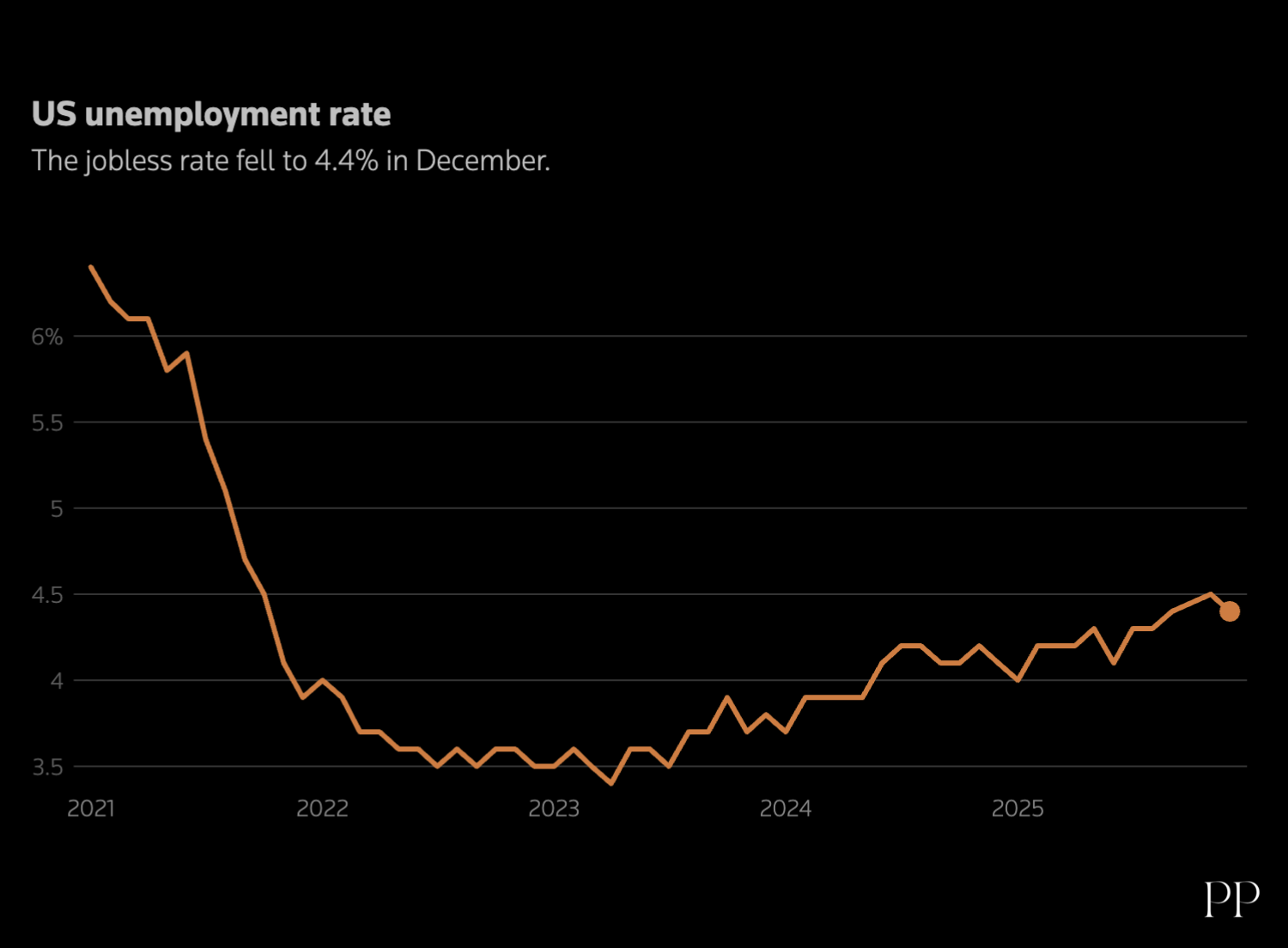
U.S. employment growth slowed more than expected in December amid job losses in the construction, retail and manufacturing sectors, but a decline in the unemployment rate to 4.4% suggested the labor market was not rapidly deteriorating.
The Labor Department's closely watched employment report on Friday also showed solid wage growth last month, bolstering economists' expectations the Federal Reserve would leave interest rates unchanged at its January 27-28 meeting.
Economists have blamed sluggish job growth on President Donald Trump's aggressive trade and immigration policies, which they say have reduced both demand for and supply of workers.
Businesses are also holding back on hiring, unsure of their staffing needs as they invest heavily in artificial intelligence. The economy is experiencing a jobless expansion, with growth and worker productivity surging in the third quarter, which was partly attributed to AI.
"All roads lead to the unemployment rate ... it should douse the Fed's recent urgency to backstop a weakening labor market," said Olu Sonola, head of U.S. economic research at Fitch Ratings. "That said, the weak job-growth story can't be brushed aside. Hiring is still stuck in stall speed, and job growth in the cyclical parts of the economy isn't sending a comforting signal."
Nonfarm payrolls increased by 50,000 jobs last month after a downwardly revised rise of 56,000 in November, the Labor Department's Bureau of Labor Statistics said. Economists polled by Reuters had forecast a gain of 60,000 jobs after a previously reported increase of 64,000 in November.
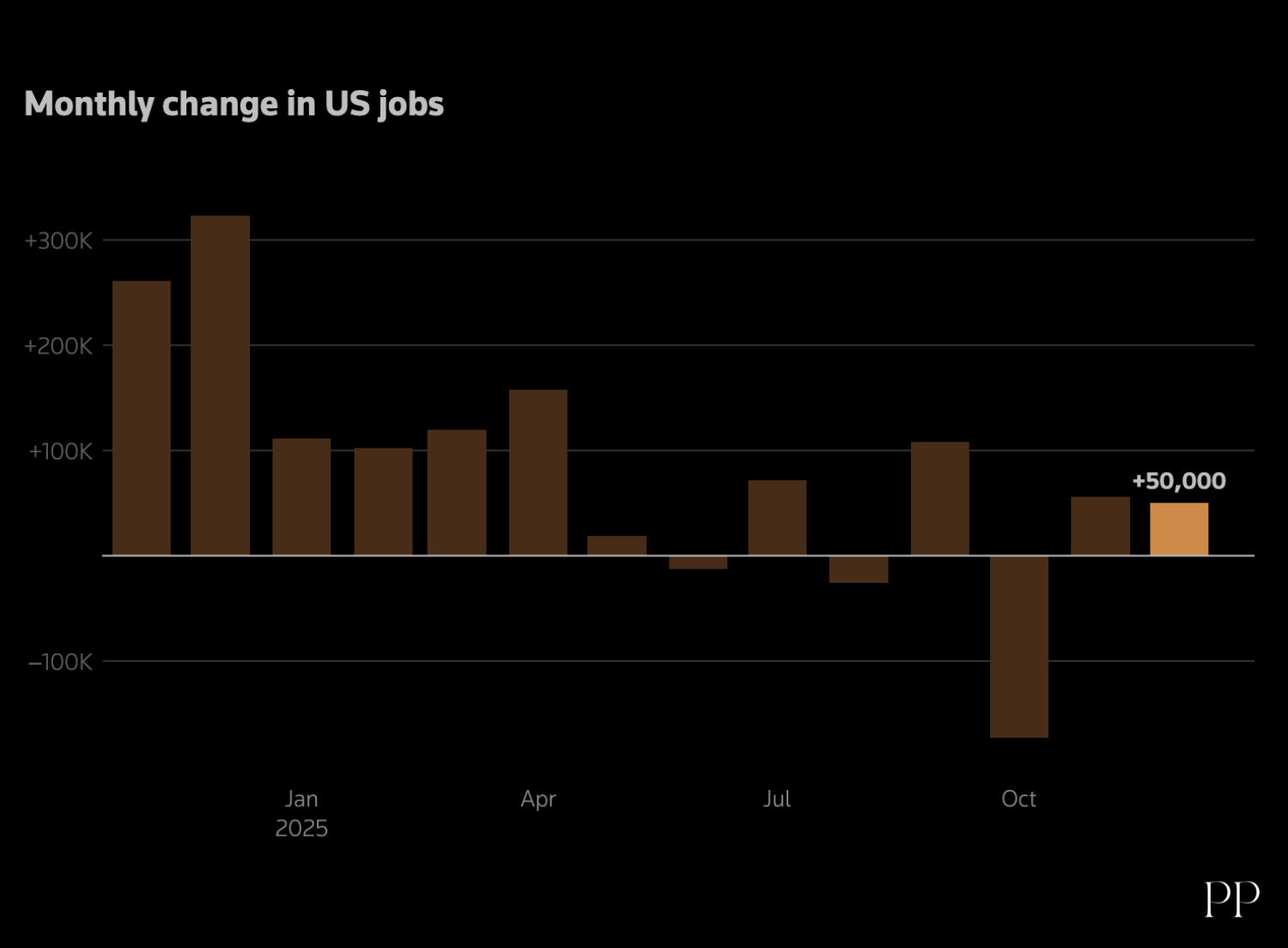 Job losses in October were revised higher to 173,000, the most in nearly five years and the result of federal government employees who took deferred buyouts, from the previously estimated 105,000. Job losses have averaged 22,000 over the past three months, underscoring the loss of momentum in the labor market.
Economists said negative quarterly payrolls were unusual outside a recession. They described the labor market as being stuck in a "low-hire, low-fire" mode.
Only 584,000 jobs were added in 2025, averaging about 49,000 positions per month. That figure was less than a third of the 2 million jobs created in 2024, when employment gains averaged about 168,000 positions per month.
"Throughout the year, persistent policy headwinds weighed on business sentiment and curtailed hiring, prompting many firms to remain cautious and prioritize cost control and flexibility in response to an unpredictable operating environment," said Lydia Boussour, senior economist at EY-Parthenon.
Job gains were narrow, with the share of industries reporting growth falling to 50.8% from 55.6% in November.
Restaurants and bars led the employment gains, with payrolls increasing by 27,000 positions. Employment in the healthcare industry gained 21,000 positions, with most of the increase occurring at hospitals. But that rise was well below the average monthly gain of 34,000 jobs in 2025 and 56,000 in 2024.
The social assistance sector added 17,000 jobs last month. Federal government employment increased by 2,000 jobs, but was down 274,000 positions in 2025 after the Trump administration embarked on an unprecedented campaign to slash the workforce. There were modest employment gains in the financial and utilities sectors.
Job losses in October were revised higher to 173,000, the most in nearly five years and the result of federal government employees who took deferred buyouts, from the previously estimated 105,000. Job losses have averaged 22,000 over the past three months, underscoring the loss of momentum in the labor market.
Economists said negative quarterly payrolls were unusual outside a recession. They described the labor market as being stuck in a "low-hire, low-fire" mode.
Only 584,000 jobs were added in 2025, averaging about 49,000 positions per month. That figure was less than a third of the 2 million jobs created in 2024, when employment gains averaged about 168,000 positions per month.
"Throughout the year, persistent policy headwinds weighed on business sentiment and curtailed hiring, prompting many firms to remain cautious and prioritize cost control and flexibility in response to an unpredictable operating environment," said Lydia Boussour, senior economist at EY-Parthenon.
Job gains were narrow, with the share of industries reporting growth falling to 50.8% from 55.6% in November.
Restaurants and bars led the employment gains, with payrolls increasing by 27,000 positions. Employment in the healthcare industry gained 21,000 positions, with most of the increase occurring at hospitals. But that rise was well below the average monthly gain of 34,000 jobs in 2025 and 56,000 in 2024.
The social assistance sector added 17,000 jobs last month. Federal government employment increased by 2,000 jobs, but was down 274,000 positions in 2025 after the Trump administration embarked on an unprecedented campaign to slash the workforce. There were modest employment gains in the financial and utilities sectors.
 The retail industry shed 25,000 jobs amid low holiday season hiring. Manufacturing lost another 8,000 positions and employment in the sector decreased by 68,000 jobs last year. Economists have attributed factory job losses to the Trump administration's tariff increases. Trump, ironically, has defended the import duties as necessary to revive the manufacturing industry.
Construction payrolls decreased by 11,000 in December. Economists saw little impact from frigid temperatures, pointing to the increase in hiring at restaurants and bars last month. There were job losses at mines and wholesalers. Payrolls also declined in the transportation and warehousing as well as the professional and business services sectors.
Even as businesses are reluctant to hire, they are not reducing wages, which increased 3.8% on a year-over-year basis after rising 3.6% in November. Economists said solid wage growth was consistent with worker shortages in some industries.
Financial markets expect the U.S. central bank will leave rates on hold beyond this month's meeting. The Fed cut its benchmark interest rate by a quarter of a percentage point to the 3.50%-3.75% range in December.
With factors like tariffs and AI preventing companies from hiring more workers, economists increasingly view the labor market's challenges as more structural than cyclical, which would make rate cuts less effective to stimulate job growth.
U.S. stocks were trading higher. The dollar advanced versus a basket of currencies. Longer-dated U.S. Treasury yields fell.
Labor market fragility could be even more evident next month when the BLS publishes its payrolls benchmark revision. The BLS has estimated about 911,000 fewer jobs were created in the 12 months through March 2025 than previously reported.
The retail industry shed 25,000 jobs amid low holiday season hiring. Manufacturing lost another 8,000 positions and employment in the sector decreased by 68,000 jobs last year. Economists have attributed factory job losses to the Trump administration's tariff increases. Trump, ironically, has defended the import duties as necessary to revive the manufacturing industry.
Construction payrolls decreased by 11,000 in December. Economists saw little impact from frigid temperatures, pointing to the increase in hiring at restaurants and bars last month. There were job losses at mines and wholesalers. Payrolls also declined in the transportation and warehousing as well as the professional and business services sectors.
Even as businesses are reluctant to hire, they are not reducing wages, which increased 3.8% on a year-over-year basis after rising 3.6% in November. Economists said solid wage growth was consistent with worker shortages in some industries.
Financial markets expect the U.S. central bank will leave rates on hold beyond this month's meeting. The Fed cut its benchmark interest rate by a quarter of a percentage point to the 3.50%-3.75% range in December.
With factors like tariffs and AI preventing companies from hiring more workers, economists increasingly view the labor market's challenges as more structural than cyclical, which would make rate cuts less effective to stimulate job growth.
U.S. stocks were trading higher. The dollar advanced versus a basket of currencies. Longer-dated U.S. Treasury yields fell.
Labor market fragility could be even more evident next month when the BLS publishes its payrolls benchmark revision. The BLS has estimated about 911,000 fewer jobs were created in the 12 months through March 2025 than previously reported.