Source Credit : Portfolio Prints
Overview
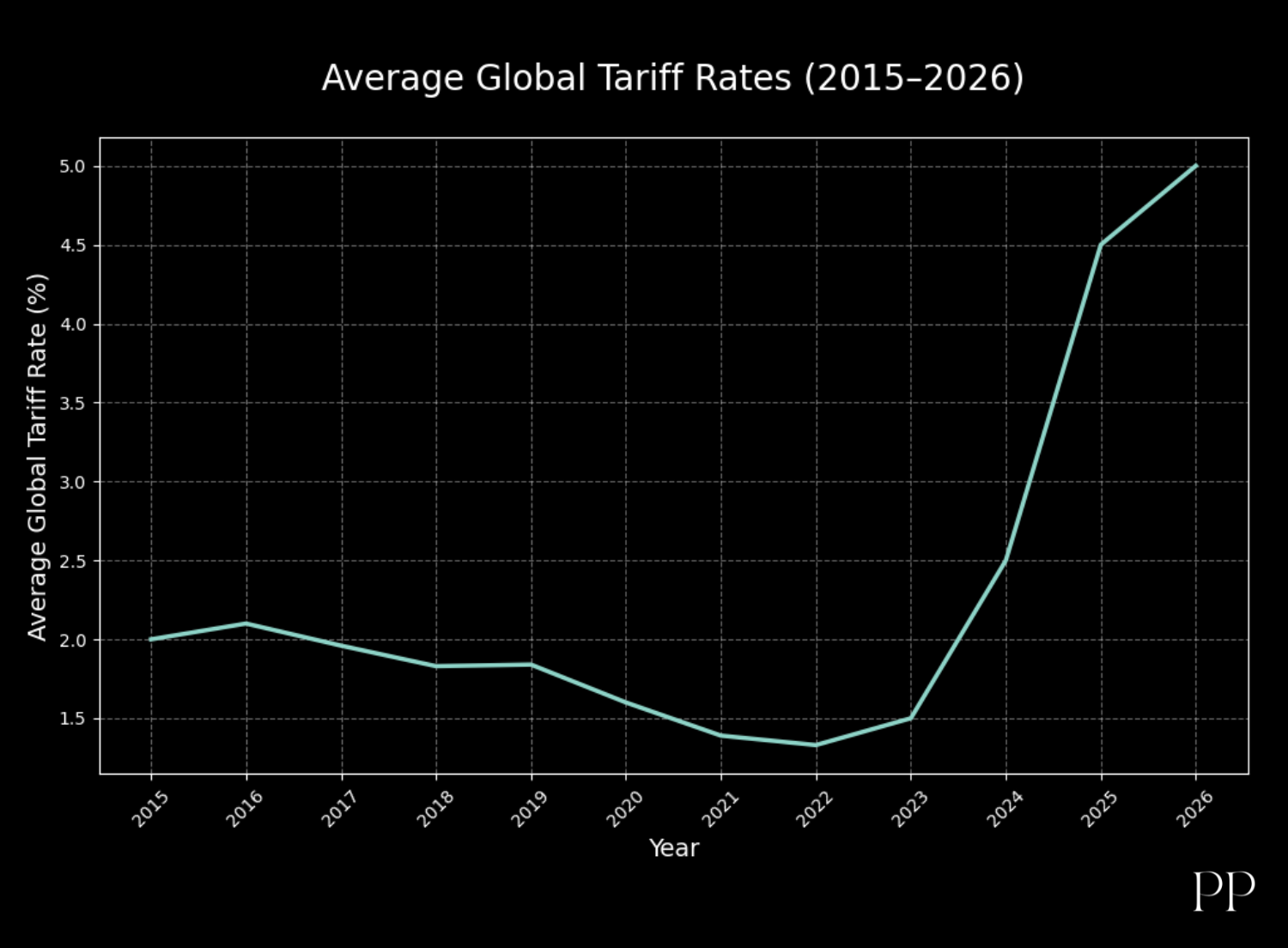
In early 2025–2026, global trade experienced a dramatic shift as tariffs — especially those led by the United States — surged to the forefront of international economic policy. These tariff actions, unprecedented in scale and scope since the post-World War II era, are reshaping supply chains, redistributing competitive advantage across industries, and rewiring geopolitical alignments. The intensity of these changes stems from major tariff impositions, legal challenges, retaliatory measures, and strategic trade diplomacy from key economies.
The Latest U.S. Tariff Moves: High Stakes and High Uncertainty
At the center of recent events is the United States’ evolving tariff regime.
- Following a Supreme Court ruling that struck down previous tariff authority, the U.S. quickly instituted a 10% global tariff on imports — with intentions to raise it to 15% under a different legal statute.
- This shift has introduced legal and economic uncertainty for global businesses, as companies seek refunds, reassess investment plans, or grapple with fluctuating input costs.
- Meanwhile, new product-specific tariff changes have emerged — such as reimposed tariffs on Belgian diamonds and Portuguese cork, impacting EU exports valued in the billions.
- Some tariff reductions have occurred in targeted areas, such as zero tariffs on Brazilian aircraft exports to the U.S. — a victory for sectors like aerospace but highlighting the complexity and negotiation-based nature of modern tariff policy.
These policy swings create economic unpredictability, as firms adjust pricing, supply chains, and production footprints to shifting duties and protectionist signals.
Supply Chain Realignment and Industrial Strategy
Near-shoring and Reshoring Trends
Companies are increasingly bringing production closer to home or relocating from traditional offshore centers to mitigate tariff costs and supply risks.
- For example, a major U.S. manufacturing firm expanded its Houston operations, citing tariffs as a key reason for reshoring previously offshore production.
Diversifying Sourcing Beyond China
Tariffs — especially higher duties on Chinese goods — are accelerating the “China+1” strategy, where firms diversify supply to other Asian economies like India, Vietnam, and Thailand to reduce tariff exposure and geopolitical risk.
Economic Impacts on Growth, Prices, and Labor Markets
Slower Global Growth and Trade Volumes
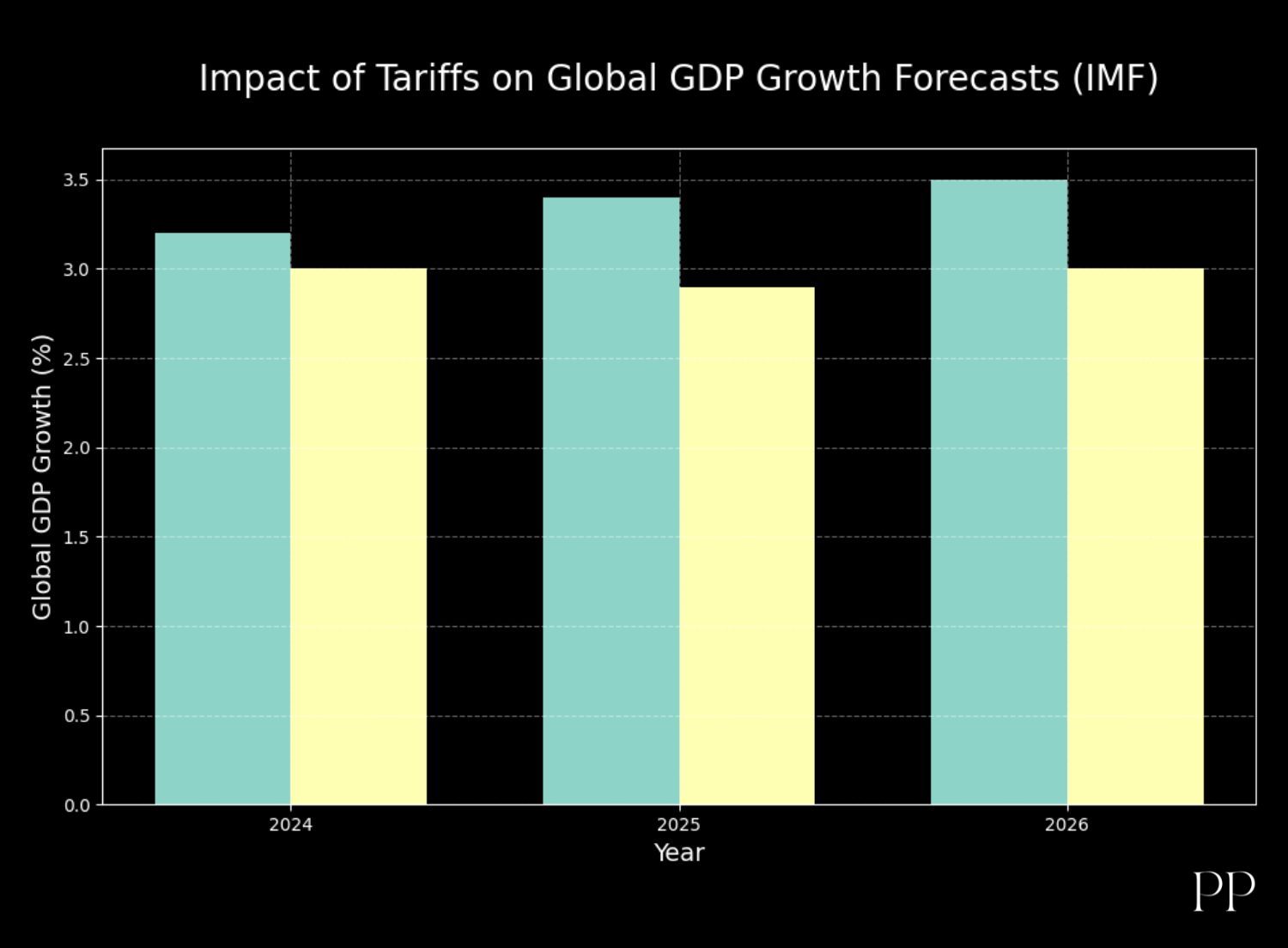
Economic forecasting bodies have warned that tariff escalation could weigh on global GDP and trade:
- Trade tensions have led to lower growth projections for global merchandise trade, contraction in some sectors, and heightened recession risk in major economies.
- A multiregional economic model suggests tariff increases and retaliatory measures could lead to global employment losses of over 23 million jobs, disproportionately affecting low-income and informal workers.
| Industry |
Estimated Growth Boost from Tariffs (%) |
Primary Driver |
| Steel |
+8.5% |
Import duties on foreign steel raising domestic prices |
| Aerospace |
+6.2% |
Targeted tariff exemptions & defense-linked industrial policy |
| Semiconductors |
+9.8% |
Tariffs on chip imports + domestic subsidy programs |
| Automobiles |
+4.3% |
Higher tariffs on imported vehicles |
| Solar Manufacturing |
+11.5% |
Anti-dumping duties & green industrial policy |
Inflationary Pressures
Tariffs act like taxes on imported goods — often passed on to consumers through higher prices, especially for consumer electronics, textiles, and inputs for manufacturing. Recent estimates indicate American households may face significantly higher costs due to tariff-induced price increases.
Shifting Competitive Landscapes for Nations and Industries
Winners and Losers
Tariff policies have redistributed global market opportunities:
- Some sectors and countries have found openings. For instance, Brazil’s aircraft exports have become more competitive in the U.S. following targeted tariff relief.
- Conversely, sectors like artisans, leather goods, and agricultural products in exporting nations such as India have faced competitive displacement — with buyers shifting to lower-tariff producers.
Technological and Strategic Rivalries
Tariffs — often paired with export controls on technology — are deepening a global tech divide, particularly between the U.S. and China. Reduced collaboration and separate technological ecosystems may emerge, adding complexity for multinational firms.
Forward Outlook: Policy, Business Strategy, and Global Economics
Persistence of Tariff Uncertainty
Given the ongoing legal challenges, legislative debates, and temporary legal mechanisms governing current tariff levels, businesses and governments face sustained uncertainty — making long-term planning more difficult.
Strategic Adaptation
Companies will likely continue reconfiguring supply chains, investing in automation and distribution hubs in tariff-advantaged regions, and hedging risks through trade agreements and export diversification.
Potential for New Trade Frameworks
Tariffs are catalyzing discussions on new trade frameworks that may emphasize reciprocity, strategic industrial policy, and resilience — potentially leading to a re-imagined global economic order beyond the simplistic free-trade vs. protectionist dichotomy.
Conclusion
The recent surge in global tariffs — particularly those initiated by the United States and met with widespread international responses — represents a transformative moment for the world economy. These policies are not isolated taxes; they are tools of economic strategy, geopolitics, and industrial realignment. From supply chains and labor markets to diplomatic relationships and consumer prices, tariffs are reshaping economic incentives across continents. The continuing evolution of tariff regimes, trade negotiations, and competitive strategies will profoundly influence global economic dynamics in the years ahead.