UK inflation jumps to 3.3% in March as fuel prices surge
Image Credit : Bloomberg
Source Credit : Portfolio Prints
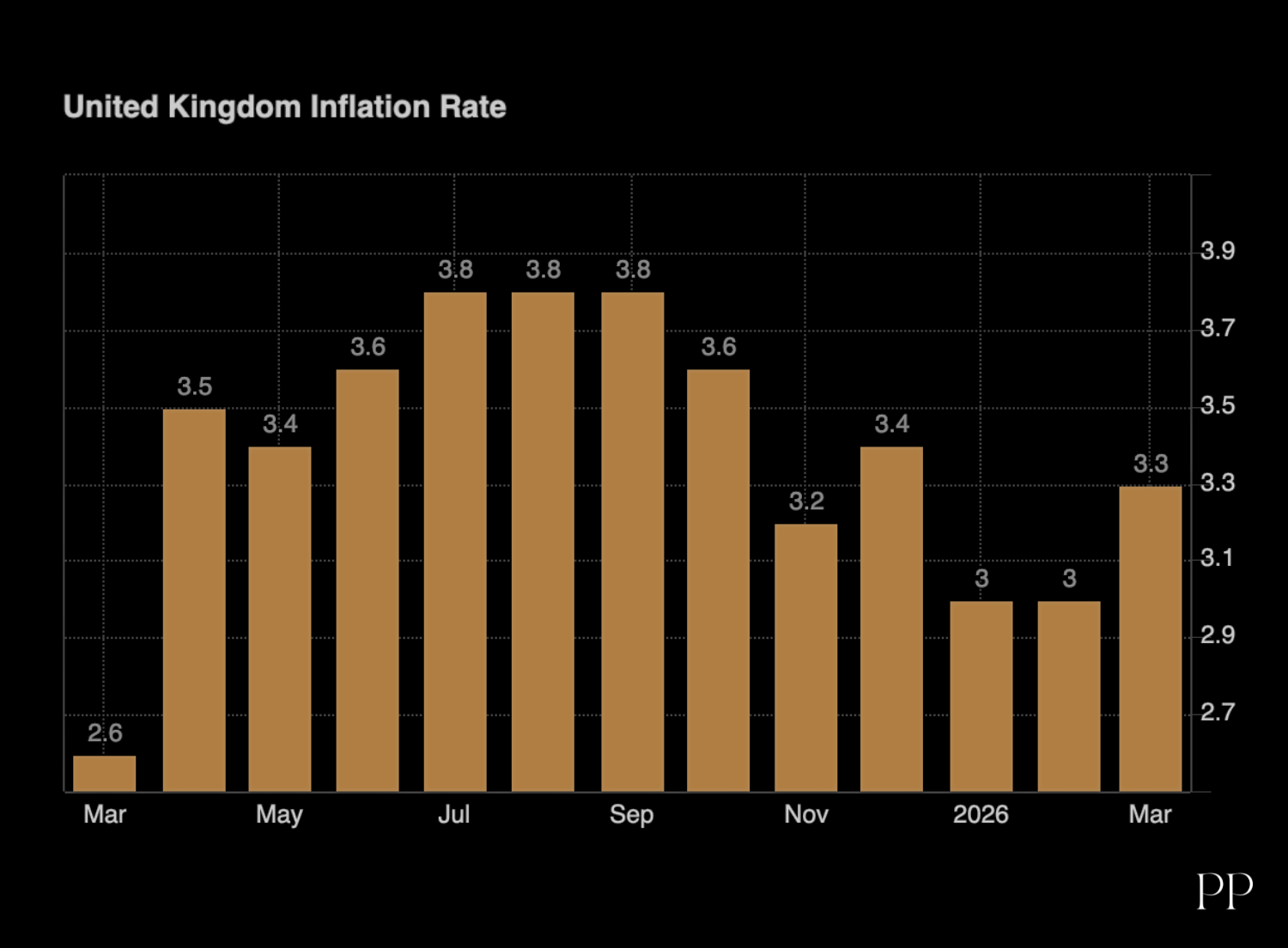
UK inflation accelerated to 3.3% in March, driven by a surge in fuel costs following the Iran conflict that triggered the sharpest rise in transport prices since December 2022.
Data from the Office for National Statistics showed the Consumer Prices Index (CPI) rose from 3% in February, intensifying pressure on households already strained by the cost of living crisis. The increase was in line with economists’ expectations.
 ONS chief economist Grant Fitzner said inflation was pushed higher largely by fuel prices, which recorded their biggest jump in more than three years. Air fares and food prices also contributed to the upward trend.
Petrol and diesel prices have climbed sharply since the onset of the US-Israeli conflict with Iran, reflecting a spike in global oil prices to nearly $100 per barrel. Supply disruptions linked to the closure of the Strait of Hormuz have tightened energy markets, amplifying cost pressures across the economy.
The International Monetary Fund has warned that the UK faces the steepest growth slowdown and one of the highest inflation rates among G7 economies this year, as geopolitical tensions raise the risk of a broader global downturn.
Inflation remains above the government’s 2% target, complicating the outlook for monetary policy. The Bank of England held interest rates steady last month but cautioned that prolonged conflict and energy market disruption could necessitate further rate hikes to prevent inflation from becoming entrenched.
Prior to the conflict, inflation had been expected to fall sharply in April, aided by measures announced in Rachel Reeves’s autumn budget, including energy bill reductions. Forecasts had pointed to a drop close to 2%, but economists now expect inflation to remain persistently elevated as the war’s economic impact deepens.
Reeves said the government was taking steps to shield households and businesses from rising costs, emphasizing that while the conflict is external, its economic consequences are being felt domestically.
Transport costs were a major driver of March’s inflation. Overall transport prices rose 4.7% year-on-year, up from 2.4% in February—the fastest pace since December 2022. Petrol prices increased by 8.6p per litre to 140.2p, the highest since August 2024, while diesel rose by 17.6p to 158.7p, the highest level since November 2023.
Fitzner noted that clothing prices provided the only significant offset, rising less than they did a year earlier. However, input costs for businesses—including raw materials and factory gate prices—climbed sharply, largely due to higher crude oil and fuel prices.
Because fuel prices are averaged across the month when calculating inflation, continued increases suggest further upward pressure in April.
Martin Beck said the trajectory of inflation will depend heavily on developments in the Middle East. If diplomatic progress leads to stabilised energy supplies, inflation could peak between 3.5% and 4% this summer. However, renewed escalation could drive it closer to 5%, underscoring the fragile and highly uncertain outlook.
ONS chief economist Grant Fitzner said inflation was pushed higher largely by fuel prices, which recorded their biggest jump in more than three years. Air fares and food prices also contributed to the upward trend.
Petrol and diesel prices have climbed sharply since the onset of the US-Israeli conflict with Iran, reflecting a spike in global oil prices to nearly $100 per barrel. Supply disruptions linked to the closure of the Strait of Hormuz have tightened energy markets, amplifying cost pressures across the economy.
The International Monetary Fund has warned that the UK faces the steepest growth slowdown and one of the highest inflation rates among G7 economies this year, as geopolitical tensions raise the risk of a broader global downturn.
Inflation remains above the government’s 2% target, complicating the outlook for monetary policy. The Bank of England held interest rates steady last month but cautioned that prolonged conflict and energy market disruption could necessitate further rate hikes to prevent inflation from becoming entrenched.
Prior to the conflict, inflation had been expected to fall sharply in April, aided by measures announced in Rachel Reeves’s autumn budget, including energy bill reductions. Forecasts had pointed to a drop close to 2%, but economists now expect inflation to remain persistently elevated as the war’s economic impact deepens.
Reeves said the government was taking steps to shield households and businesses from rising costs, emphasizing that while the conflict is external, its economic consequences are being felt domestically.
Transport costs were a major driver of March’s inflation. Overall transport prices rose 4.7% year-on-year, up from 2.4% in February—the fastest pace since December 2022. Petrol prices increased by 8.6p per litre to 140.2p, the highest since August 2024, while diesel rose by 17.6p to 158.7p, the highest level since November 2023.
Fitzner noted that clothing prices provided the only significant offset, rising less than they did a year earlier. However, input costs for businesses—including raw materials and factory gate prices—climbed sharply, largely due to higher crude oil and fuel prices.
Because fuel prices are averaged across the month when calculating inflation, continued increases suggest further upward pressure in April.
Martin Beck said the trajectory of inflation will depend heavily on developments in the Middle East. If diplomatic progress leads to stabilised energy supplies, inflation could peak between 3.5% and 4% this summer. However, renewed escalation could drive it closer to 5%, underscoring the fragile and highly uncertain outlook.