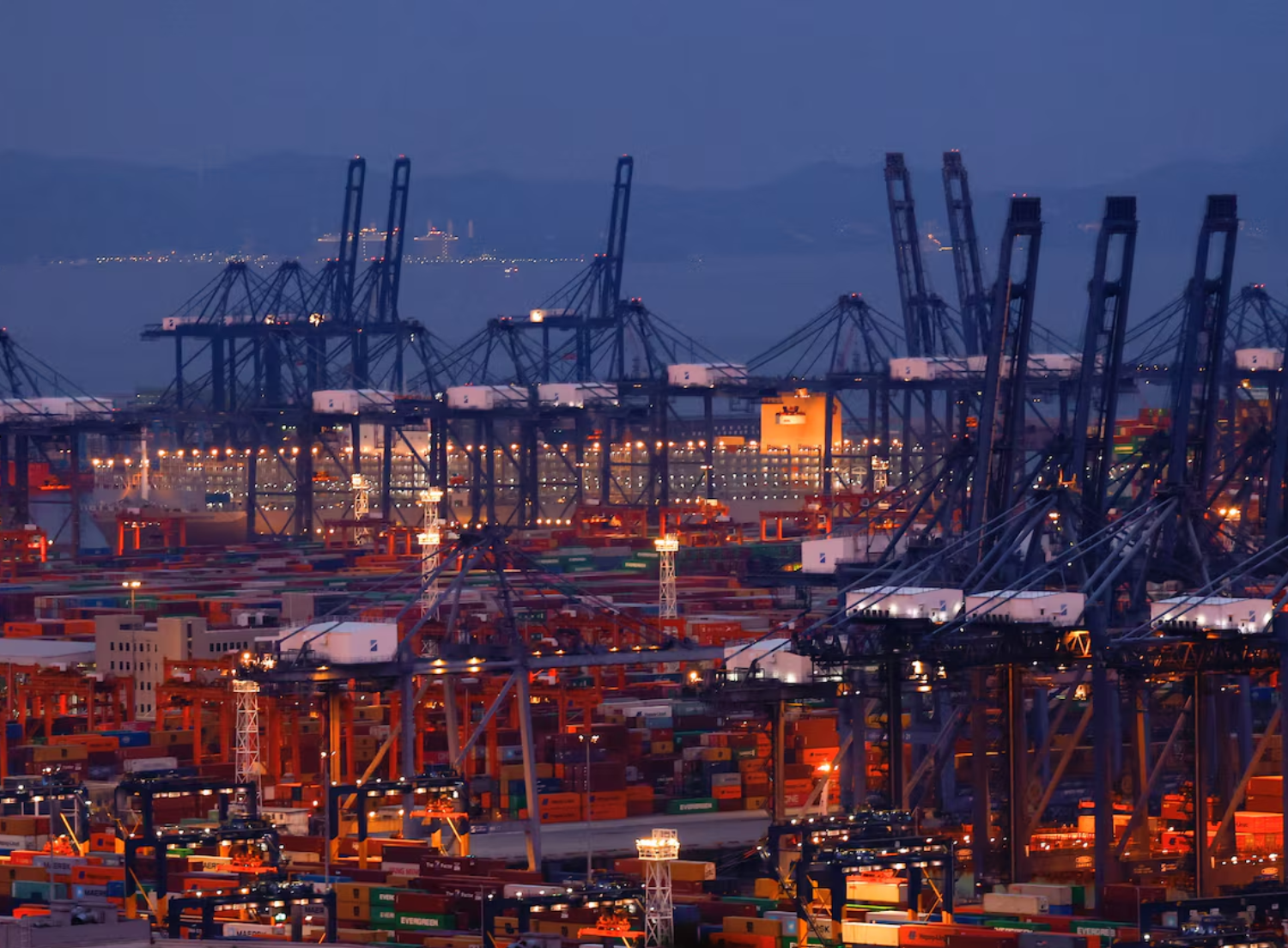
China's factory-gate inflation at nearly 4-year high
Image Credit : Reuters
Source Credit : Portfolio Prints
China’s factory-gate inflation accelerated to its fastest pace in nearly four years in May, driven by soaring raw material and energy costs linked to the Iran war as well as a surge in investment tied to artificial intelligence, while consumer inflation remained subdued and undershot expectations.
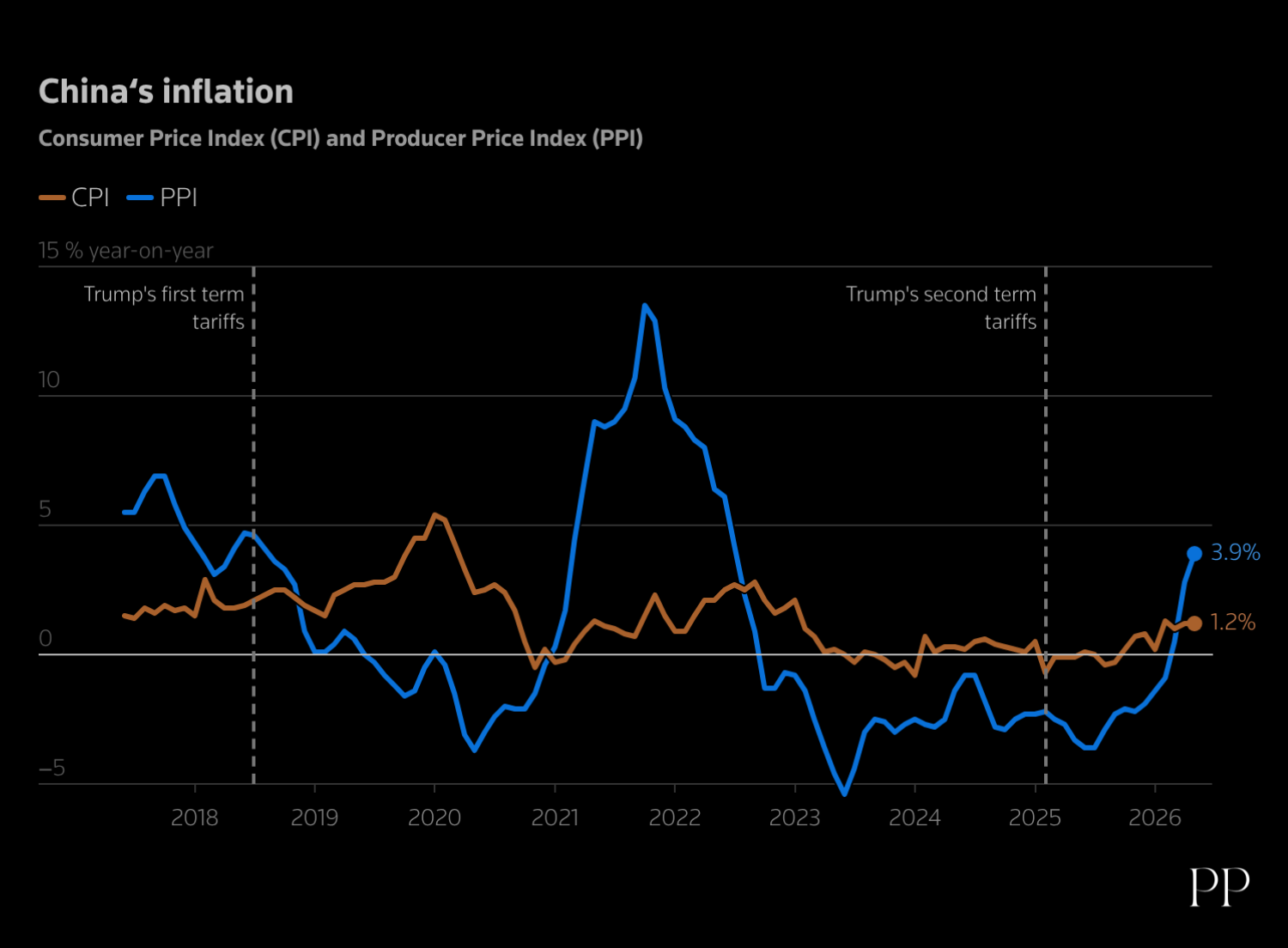
The producer price index (PPI) rose 3.9% from a year earlier, its strongest increase since July 2022, according to data released by the National Bureau of Statistics (NBS) on Wednesday. The reading exceeded economists’ forecast of 3.8% in a Reuters poll and accelerated from April’s 2.8% gain.
China’s wholesale prices returned to growth in March after years of deflationary pressure, as disruptions stemming from the Middle East conflict sharply raised input costs. The Iran war has severely constrained shipping through the Strait of Hormuz, a critical artery for global energy and commodity flows, driving up the cost of fuel and industrial materials.
Purchasing prices for fuel and power climbed 10% year-on-year in May, accelerating from 4.4% growth in April, while costs for non-ferrous metals and wire materials surged 22%, underscoring the breadth of inflationary pressures facing manufacturers.
 Beyond geopolitical disruptions, rising demand for AI infrastructure has emerged as another major driver of industrial inflation. Strong investment in data centres, advanced computing systems and semiconductor production boosted prices across key technology supply chains.
“The accelerating shift toward electrification, deeper AI adoption and surging computing demand pushed up prices across non-ferrous metals, electrical machinery and computer hardware,” NBS chief statistician Dong Lijuan said in a statement. Prices in non-ferrous metal mining jumped 36.5% from a year earlier, while smelting and processing costs rose 24%.
In contrast, consumer inflation remained relatively muted. The consumer price index (CPI) increased 1.2% year-on-year in May, below economists’ expectations of 1.3%. On a monthly basis, consumer prices slipped 0.1% from April. Gasoline prices, however, surged 23.5% from a year earlier, reflecting higher global energy costs.
Core inflation, which strips out volatile food and energy prices, eased slightly to 1.1% from 1.2% in April, while food prices fell 1.7% from a year earlier.
“The inflationary pressure from higher energy costs is not particularly strong in the consumer sector because domestic demand remains weak,” said Zhiwei Zhang, president and chief economist at Pinpoint Asset Management.
Financial markets reacted cautiously to the data. China’s CSI 300 Index fell about 1%, while Hong Kong’s Hang Seng Index lost 0.8%. The yield on China’s benchmark 10-year government bond was little changed at 1.74%, according to LSEG data.
China has largely mitigated the worst effects of the energy shock through substantial strategic oil reserves and a rapidly expanding renewable energy sector. The world’s largest crude importer has reduced oil purchases by nearly 20% since the outbreak of the Iran war, according to official customs data compiled by Wind Information, helping prevent an even sharper rise in global oil prices.
Still, economists warned that the current reflationary trend is being driven primarily by supply-side pressures rather than stronger demand, raising concerns about corporate profitability and consumer spending.
“What we’re seeing is Chinese factories being squeezed from both sides,” said Josh Gilbert, lead APAC analyst at trading platform eToro. “Input costs are rising, but weak demand and persistent overcapacity mean companies have little ability to pass those costs on to consumers.”
“Until domestic demand recovers, the pressure on factory margins is only likely to intensify,” he added.
Despite those challenges, China’s exports remained resilient. Overseas shipments rose 19.4% in May from a year earlier in U.S. dollar terms, marking the strongest growth in three months and benefiting from robust global demand for renewable energy products and AI-related equipment.
Chinese households, however, remain cautious. Consumers are “keeping a tight fist around their hard-earned renminbi,” said Frederic Neumann, chief Asia economist at HSBC, noting that elevated savings rates continue to restrain spending at a time when policymakers are seeking new sources of growth beyond exports.
Recent earnings reports from luxury groups such as Ralph Lauren and LVMH Moët Hennessy Louis Vuitton have pointed to a gradual recovery in demand for premium fashion and beauty products in China, following years of discount-driven competition that weighed on margins.
Yet economists cautioned against interpreting the improvement as evidence of a broad consumer rebound. Gains in high-end spending have been supported by a recent technology-led stock market rally and favorable year-ago comparisons, factors that may prove temporary.
“It would be premature to view the recent improvement as a sign of a broad-based recovery in consumer sentiment,” said Neo Wang, lead China economist at Evercore ISI, pointing to the ongoing property downturn and a still-challenging labour market as major obstacles to a sustained consumption recovery.
Beyond geopolitical disruptions, rising demand for AI infrastructure has emerged as another major driver of industrial inflation. Strong investment in data centres, advanced computing systems and semiconductor production boosted prices across key technology supply chains.
“The accelerating shift toward electrification, deeper AI adoption and surging computing demand pushed up prices across non-ferrous metals, electrical machinery and computer hardware,” NBS chief statistician Dong Lijuan said in a statement. Prices in non-ferrous metal mining jumped 36.5% from a year earlier, while smelting and processing costs rose 24%.
In contrast, consumer inflation remained relatively muted. The consumer price index (CPI) increased 1.2% year-on-year in May, below economists’ expectations of 1.3%. On a monthly basis, consumer prices slipped 0.1% from April. Gasoline prices, however, surged 23.5% from a year earlier, reflecting higher global energy costs.
Core inflation, which strips out volatile food and energy prices, eased slightly to 1.1% from 1.2% in April, while food prices fell 1.7% from a year earlier.
“The inflationary pressure from higher energy costs is not particularly strong in the consumer sector because domestic demand remains weak,” said Zhiwei Zhang, president and chief economist at Pinpoint Asset Management.
Financial markets reacted cautiously to the data. China’s CSI 300 Index fell about 1%, while Hong Kong’s Hang Seng Index lost 0.8%. The yield on China’s benchmark 10-year government bond was little changed at 1.74%, according to LSEG data.
China has largely mitigated the worst effects of the energy shock through substantial strategic oil reserves and a rapidly expanding renewable energy sector. The world’s largest crude importer has reduced oil purchases by nearly 20% since the outbreak of the Iran war, according to official customs data compiled by Wind Information, helping prevent an even sharper rise in global oil prices.
Still, economists warned that the current reflationary trend is being driven primarily by supply-side pressures rather than stronger demand, raising concerns about corporate profitability and consumer spending.
“What we’re seeing is Chinese factories being squeezed from both sides,” said Josh Gilbert, lead APAC analyst at trading platform eToro. “Input costs are rising, but weak demand and persistent overcapacity mean companies have little ability to pass those costs on to consumers.”
“Until domestic demand recovers, the pressure on factory margins is only likely to intensify,” he added.
Despite those challenges, China’s exports remained resilient. Overseas shipments rose 19.4% in May from a year earlier in U.S. dollar terms, marking the strongest growth in three months and benefiting from robust global demand for renewable energy products and AI-related equipment.
Chinese households, however, remain cautious. Consumers are “keeping a tight fist around their hard-earned renminbi,” said Frederic Neumann, chief Asia economist at HSBC, noting that elevated savings rates continue to restrain spending at a time when policymakers are seeking new sources of growth beyond exports.
Recent earnings reports from luxury groups such as Ralph Lauren and LVMH Moët Hennessy Louis Vuitton have pointed to a gradual recovery in demand for premium fashion and beauty products in China, following years of discount-driven competition that weighed on margins.
Yet economists cautioned against interpreting the improvement as evidence of a broad consumer rebound. Gains in high-end spending have been supported by a recent technology-led stock market rally and favorable year-ago comparisons, factors that may prove temporary.
“It would be premature to view the recent improvement as a sign of a broad-based recovery in consumer sentiment,” said Neo Wang, lead China economist at Evercore ISI, pointing to the ongoing property downturn and a still-challenging labour market as major obstacles to a sustained consumption recovery.