US job openings rise to two-year high
Image Credit : Reuters
Source Credit : Portfolio Prints
The U.S. labor market presented a mixed picture in May as job openings climbed to a two-year high, signaling resilient labor demand, while slowing hiring and weakening consumer confidence pointed to growing caution among both employers and workers.
According to the U.S. Department of Labor's Job Openings and Labor Turnover Survey (JOLTS), job openings increased by 9,000 to 7.59 million at the end of May, surpassing economists' expectations of 7.30 million and marking the highest level since May 2024. The number of available jobs translated to approximately 1.04 openings for every unemployed worker, little changed from April but slightly higher than a year earlier, suggesting that demand for labor remains relatively stable.
Economists said the conflicting signals indicate that the labor market is cooling gradually rather than deteriorating sharply. They also noted that the recent U.S.-Israel conflict with Iran has had little measurable impact on employment, with the fragile ceasefire reducing immediate economic risks and allowing the Federal Reserve to remain focused primarily on inflation.
"The labor market continues to show signs of stabilization," said Matthew Martin, Senior U.S. Economist at Oxford Economics, adding that policymakers are likely to keep their attention on maintaining price stability rather than responding to labor market weakness.
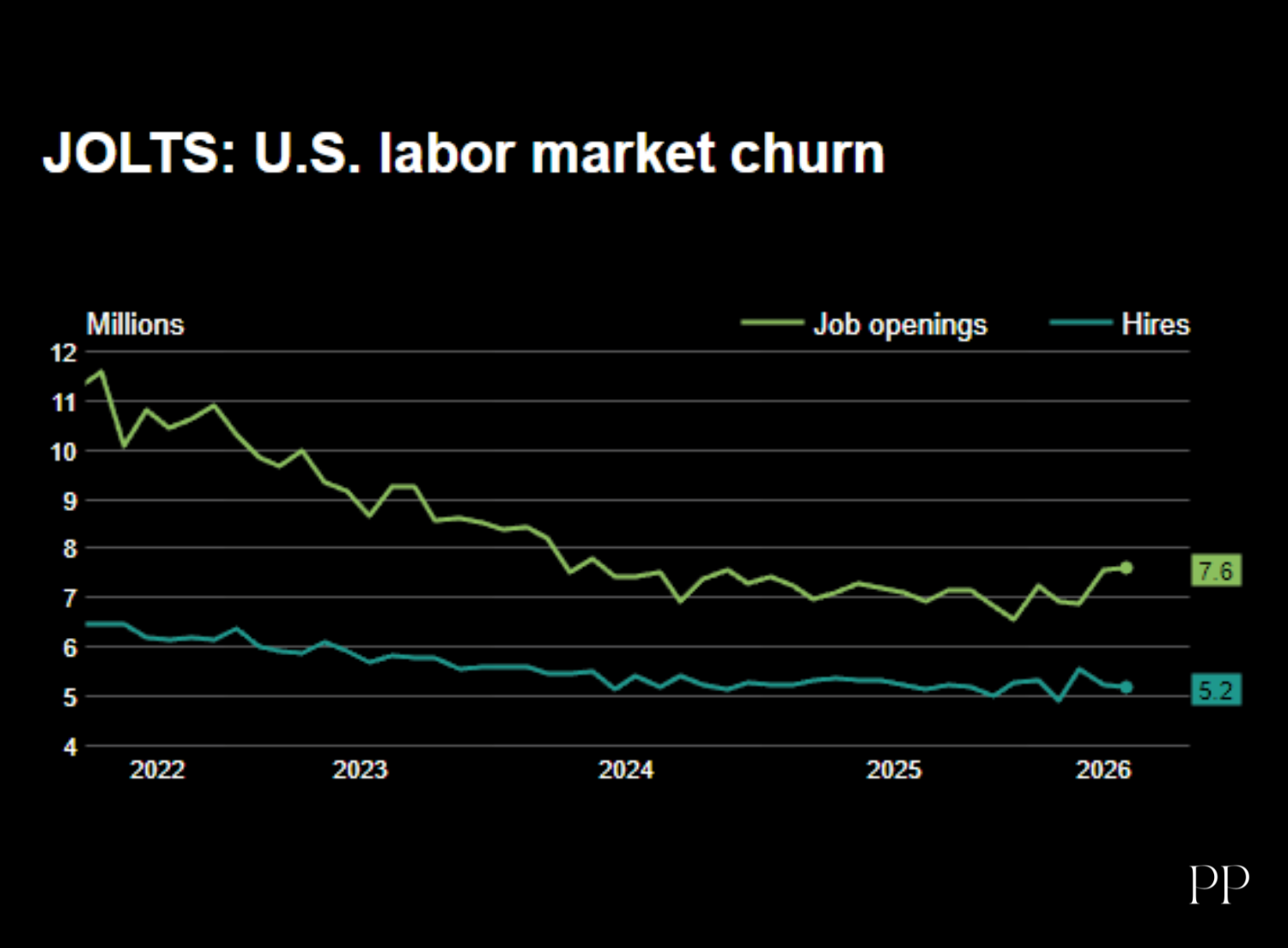 Despite the rise in job openings, hiring activity softened. Employers hired 5.17 million workers in May, down 45,000 from the previous month, although the hiring rate remained unchanged at 3.3%. The decline was driven largely by fewer hires in transportation, warehousing and utilities, with additional weakness reported in construction and wholesale trade. The softer hiring data contrasted with the stronger-than-expected payroll gains reported during the month, raising questions about whether future employment data could be revised lower.
Veronica Clark, an economist at Citigroup, said the weaker hiring figures could indicate softer job growth in June or suggest that employment gains slowed later in May despite the headline strength in payroll numbers.
The increase in job openings was concentrated among medium-sized businesses employing between 10 and 249 workers. Job vacancies expanded in wholesale trade, leisure and hospitality—particularly restaurants and bars—as well as construction and manufacturing. However, openings declined in healthcare and social assistance, finance and insurance, and transportation, warehousing and utilities, reflecting uneven demand across sectors.
Some economists also urged caution in interpreting the JOLTS report because of declining survey participation. Samuel Tombs, Chief U.S. Economist at Pantheon Macroeconomics, noted that only about one-quarter of businesses invited to participate now respond to the survey, compared with roughly 70% during the late 2010s. He warned that the lower response rate increases the risk of statistical bias and may reduce the reliability of the reported figures.
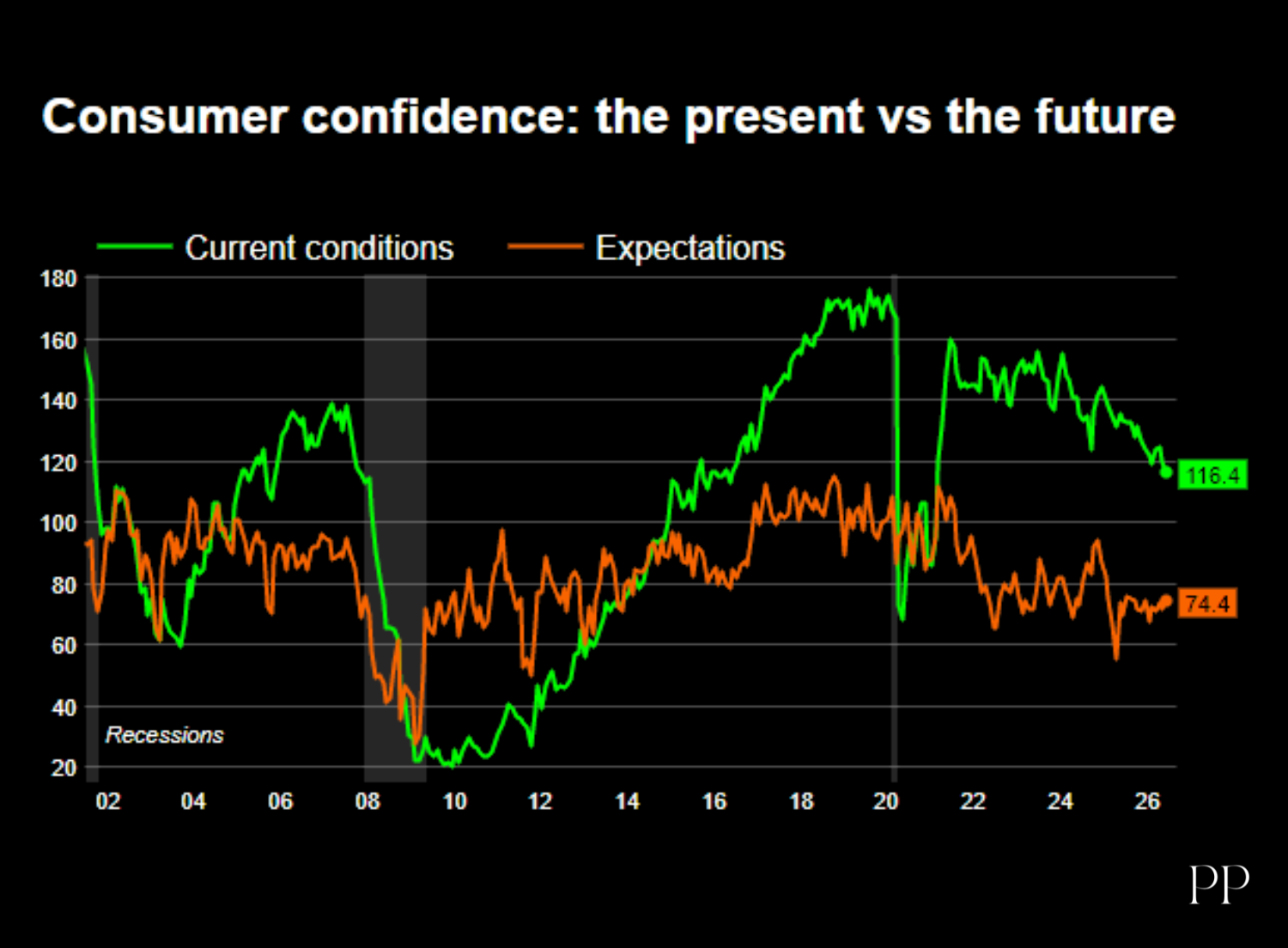
The outlook for the labor market also weakened as consumer perceptions deteriorated in June. A survey released by the Conference Board showed that the share of Americans who believe jobs are "hard to get" rose to 22.5%, the highest level since January 2021, while the percentage describing jobs as "plentiful" remained largely unchanged at 24.9%. The Conference Board's labor market differential—a closely watched indicator that often tracks the unemployment rate—narrowed sharply from 5.0 in May to 2.4 in June, suggesting the labor market may be losing momentum.
Dana Peterson, Chief Economist at the Conference Board, said consumers expect little improvement in employment conditions over the next six months, reflecting growing uncertainty about the economic outlook.
Economists surveyed by Reuters expect the June employment report, scheduled for release on Thursday, to show payroll growth slowing to around 110,000 jobs after a gain of 172,000 in May. The unemployment rate is forecast to remain at 4.3%, although several analysts believe there is an increasing risk that it could edge higher if hiring continues to weaken.
Despite softer hiring, layoffs remain historically low. Employers announced 1.71 million layoffs in May, an increase of 41,000 from the previous month, with the largest rises occurring in construction, retail, and healthcare. Meanwhile, layoffs declined in professional and business services as well as arts, entertainment, and recreation. The layoffs rate edged up to 1.1% from 1.0% in April, remaining well below levels typically associated with a weakening labor market.
Despite the rise in job openings, hiring activity softened. Employers hired 5.17 million workers in May, down 45,000 from the previous month, although the hiring rate remained unchanged at 3.3%. The decline was driven largely by fewer hires in transportation, warehousing and utilities, with additional weakness reported in construction and wholesale trade. The softer hiring data contrasted with the stronger-than-expected payroll gains reported during the month, raising questions about whether future employment data could be revised lower.
Veronica Clark, an economist at Citigroup, said the weaker hiring figures could indicate softer job growth in June or suggest that employment gains slowed later in May despite the headline strength in payroll numbers.
The increase in job openings was concentrated among medium-sized businesses employing between 10 and 249 workers. Job vacancies expanded in wholesale trade, leisure and hospitality—particularly restaurants and bars—as well as construction and manufacturing. However, openings declined in healthcare and social assistance, finance and insurance, and transportation, warehousing and utilities, reflecting uneven demand across sectors.
Some economists also urged caution in interpreting the JOLTS report because of declining survey participation. Samuel Tombs, Chief U.S. Economist at Pantheon Macroeconomics, noted that only about one-quarter of businesses invited to participate now respond to the survey, compared with roughly 70% during the late 2010s. He warned that the lower response rate increases the risk of statistical bias and may reduce the reliability of the reported figures.
The outlook for the labor market also weakened as consumer perceptions deteriorated in June. A survey released by the Conference Board showed that the share of Americans who believe jobs are "hard to get" rose to 22.5%, the highest level since January 2021, while the percentage describing jobs as "plentiful" remained largely unchanged at 24.9%. The Conference Board's labor market differential—a closely watched indicator that often tracks the unemployment rate—narrowed sharply from 5.0 in May to 2.4 in June, suggesting the labor market may be losing momentum.
Dana Peterson, Chief Economist at the Conference Board, said consumers expect little improvement in employment conditions over the next six months, reflecting growing uncertainty about the economic outlook.
Economists surveyed by Reuters expect the June employment report, scheduled for release on Thursday, to show payroll growth slowing to around 110,000 jobs after a gain of 172,000 in May. The unemployment rate is forecast to remain at 4.3%, although several analysts believe there is an increasing risk that it could edge higher if hiring continues to weaken.
Despite softer hiring, layoffs remain historically low. Employers announced 1.71 million layoffs in May, an increase of 41,000 from the previous month, with the largest rises occurring in construction, retail, and healthcare. Meanwhile, layoffs declined in professional and business services as well as arts, entertainment, and recreation. The layoffs rate edged up to 1.1% from 1.0% in April, remaining well below levels typically associated with a weakening labor market.
 Workers also continued to show caution about changing jobs. Resignations increased only marginally to 3.07 million, while the quits rate held steady at 1.9%, indicating that employees remain reluctant to leave their current positions amid economic uncertainty. Economists view the subdued quits rate as a sign that wage pressures are likely to remain contained.
"Workers tend to quit jobs when they believe something better is within reach, and right now the data indicate that many clearly don't," said Sneha Puri, an economist at Indeed Hiring Lab.
Meanwhile, broader consumer confidence improved slightly in June as easing tensions in the Middle East pushed oil prices lower, reducing fuel costs for households. However, financial markets continue to expect the Federal Reserve to raise interest rates later this year to contain inflationary pressures. The central bank left its benchmark interest rate unchanged at 3.50%–3.75% during its latest policy meeting but signaled through updated projections that additional rate increases remain possible if inflation persists.
Workers also continued to show caution about changing jobs. Resignations increased only marginally to 3.07 million, while the quits rate held steady at 1.9%, indicating that employees remain reluctant to leave their current positions amid economic uncertainty. Economists view the subdued quits rate as a sign that wage pressures are likely to remain contained.
"Workers tend to quit jobs when they believe something better is within reach, and right now the data indicate that many clearly don't," said Sneha Puri, an economist at Indeed Hiring Lab.
Meanwhile, broader consumer confidence improved slightly in June as easing tensions in the Middle East pushed oil prices lower, reducing fuel costs for households. However, financial markets continue to expect the Federal Reserve to raise interest rates later this year to contain inflationary pressures. The central bank left its benchmark interest rate unchanged at 3.50%–3.75% during its latest policy meeting but signaled through updated projections that additional rate increases remain possible if inflation persists.