How US-Iran War Is Redefining the Global Order
Image Credit : Bloomberg
Source Credit : Portfolio Prints
Introduction
The outbreak of war between the United States and Iran in February 2026 marked the culmination of escalating tensions that had persisted since the 1979 Iranian Revolution. The immediate trigger—a coordinated U.S. and Israeli strike targeting Iranian military and leadership infrastructure—rapidly escalated into a multi-theater conflict involving missile exchanges, proxy warfare, and disruptions to global trade routes.
Unlike previous Middle Eastern conflicts, the scale, intensity, and systemic consequences of this war have positioned it as a defining geopolitical event of the 21st century. It has exposed vulnerabilities in global energy systems, intensified great-power competition, and challenged the resilience of international institutions. The central thesis of this paper is that the U.S.–Iran war is catalyzing a reconfiguration of the global order, characterized by economic fragmentation, security realignment, and the erosion of multilateral norms.
Historical Context and Structural Causes
The roots of the conflict lie in a long-standing antagonistic relationship shaped by ideological divergence, regional competition, and nuclear proliferation concerns. The collapse of the Joint Comprehensive Plan of Action (JCPOA) and the failure of subsequent negotiations in 2025 removed key diplomatic safeguards, increasing the likelihood of military confrontation.
Iran’s strategic posture—built around asymmetric warfare, missile capabilities, and regional proxies—posed a persistent challenge to U.S. influence in the Middle East. Conversely, U.S. policy oscillated between containment and coercion, culminating in a military strategy aimed at neutralizing Iran’s nuclear and missile capabilities. The assassination of Iran’s Supreme Leader during the initial strikes represented a dramatic escalation, signaling a shift toward regime-targeting warfare.
This structural antagonism reflects a broader clash between competing visions of regional order: one centered on U.S.-led alliances and another on Iranian resistance and regional autonomy. The war thus represents not only a bilateral conflict but also a contest over the future geopolitical architecture of the Middle East.
Military Dynamics and Strategic Evolution
The military dimension of the conflict has been characterized by rapid escalation, technological sophistication, and geographic diffusion. The initial U.S.-Israeli air campaign involved hundreds of precision strikes targeting Iranian military infrastructure, followed by Iranian retaliatory missile and drone attacks across the region.
Despite extensive damage to its infrastructure, Iran has retained significant offensive capabilities, including thousands of missiles and drones, enabling it to sustain asymmetric pressure on U.S. forces and regional allies.
The conflict has also expanded beyond traditional battlefields. Maritime warfare in the Strait of Hormuz has emerged as a critical theater, with Iran leveraging its geographic position to disrupt global oil flows. Incidents involving attacks on commercial vessels and fluctuating control over the strait illustrate the strategic importance of chokepoints in modern warfare.
Furthermore, the war has demonstrated the increasing role of hybrid warfare, including cyber operations, proxy engagements, and economic coercion. These dynamics underscore a shift away from conventional warfare toward a more complex, multi-domain conflict environment.
Economic Disruption and Energy Geopolitics
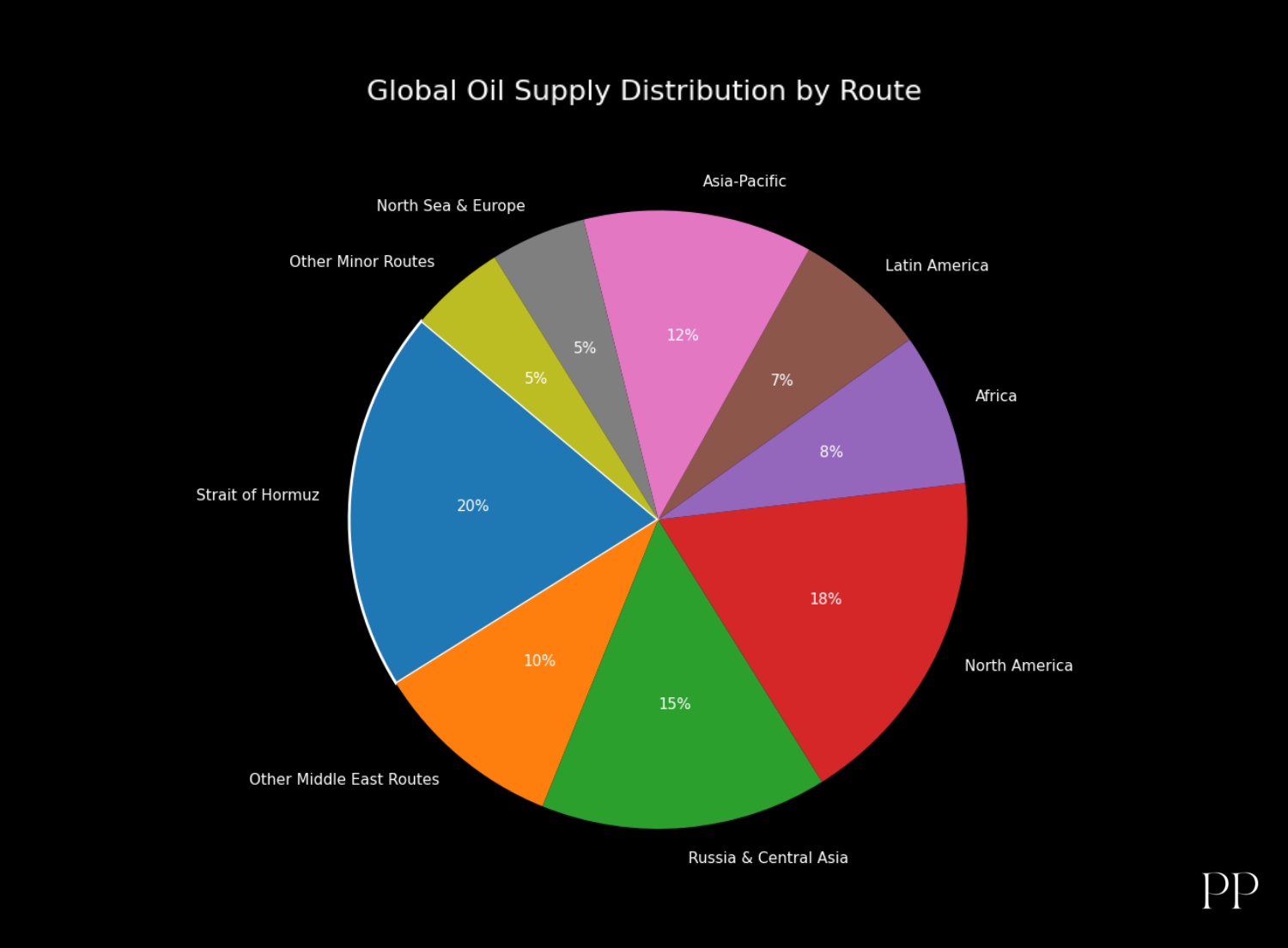
One of the most profound impacts of the war has been its disruption of the global economy, particularly through its effects on energy markets. The Strait of Hormuz, through which approximately one-fifth of global oil supplies transit, has become a focal point of economic vulnerability.
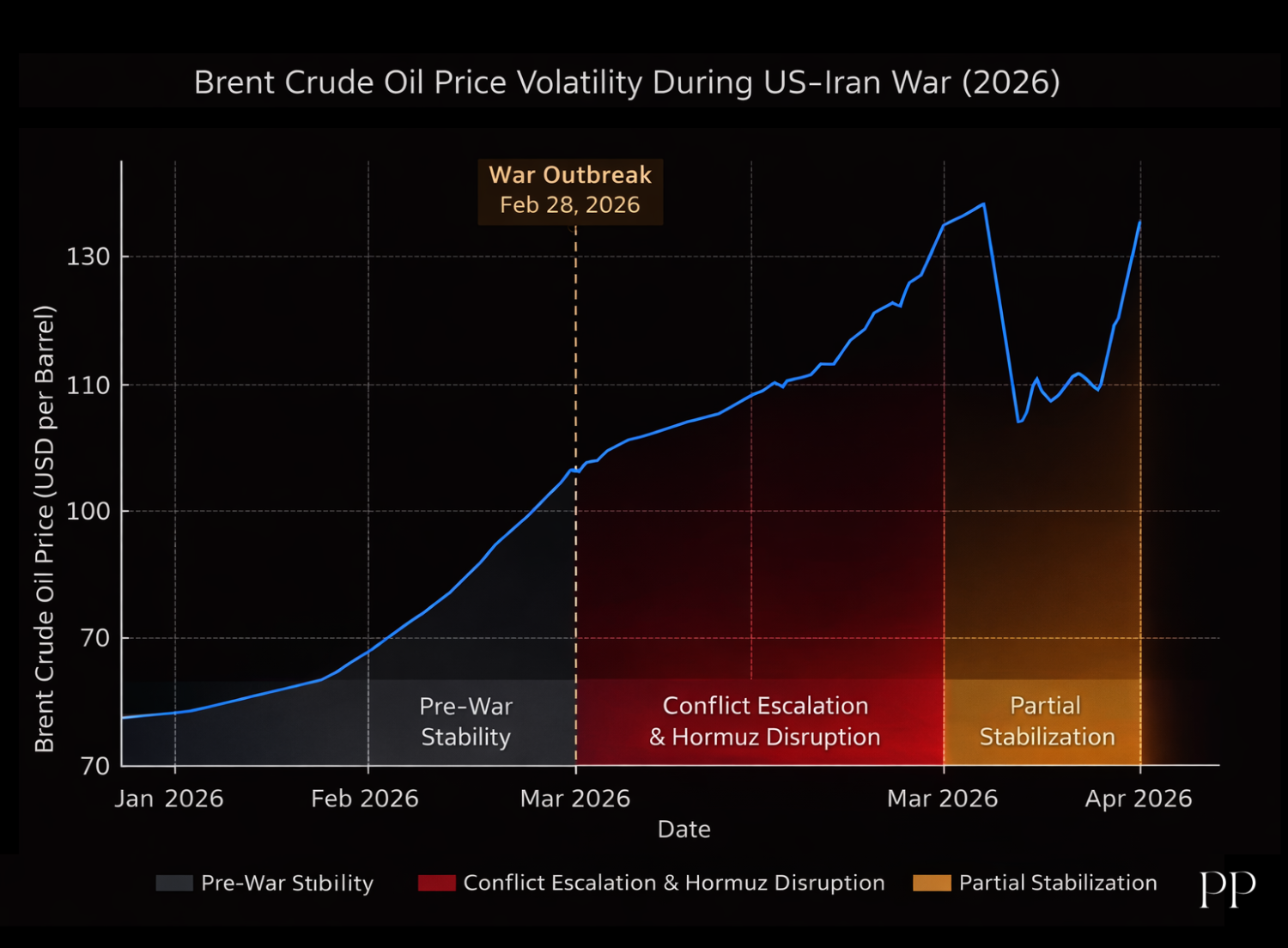
The conflict has led to significant volatility in oil prices, with spikes driven by supply disruptions and subsequent declines following temporary de-escalation signals. The International Monetary Fund has warned that the war has slowed global economic growth and intensified inflationary pressures, highlighting the systemic economic consequences of geopolitical instability.
Beyond energy markets, the war has disrupted global trade routes, forced shipping reroutes, and increased insurance and transportation costs. These developments have accelerated trends toward supply chain diversification and regionalization, as states seek to reduce dependence on vulnerable transit corridors.
In the long term, the conflict is likely to accelerate the transition toward alternative energy sources and strategic reserves, as countries attempt to mitigate exposure to geopolitical risks. However, in the short term, it has reinforced the centrality of hydrocarbons in global power dynamics.
Geopolitical Realignment and Multipolarity
The U.S.–Iran war has catalyzed significant shifts in global alliances and power structures. Traditional alliances have been strained, with some U.S. partners expressing reluctance to engage directly in the conflict. Simultaneously, regional powers have pursued independent strategies, reflecting a more fragmented geopolitical landscape.
The conflict has also highlighted the limitations of U.S. unilateralism. While the United States retains significant military and economic power, its ability to shape outcomes has been constrained by regional complexities and the resilience of adversaries. This has created opportunities for other global powers to expand their influence, contributing to the emergence of a more multipolar world order.
Moreover, the war has intensified competition among major powers for influence in the Middle East, particularly in the domains of energy, security, and infrastructure. This competition is likely to persist beyond the immediate conflict, reshaping the strategic priorities of global actors.
Institutional Erosion and the Crisis of Global Governance
The war has exposed significant weaknesses in international institutions and norms. The inability of diplomatic mechanisms to prevent escalation, coupled with disputes over the legality of military actions, has undermined confidence in the international system.
The United Nations and other multilateral organizations have struggled to mediate the conflict effectively, reflecting broader challenges in global governance. This institutional paralysis has reinforced the perception that power politics, rather than rules-based order, increasingly governs international relations.
Additionally, the conflict has raised concerns about the erosion of norms related to sovereignty, proportionality, and civilian protection. The targeting of leadership and infrastructure has blurred the boundaries of acceptable conduct in warfare, potentially setting precedents for future conflicts.
Security Externalities and the Risk of Escalation
The war has generated a range of security externalities, including the proliferation of violence beyond the immediate conflict zone. Proxy groups and allied militias have expanded the scope of the conflict, increasing the risk of regional destabilization.
The potential for escalation remains significant, particularly given the presence of advanced weaponry and the involvement of multiple actors. The risk of miscalculation or unintended escalation is heightened by the complexity of the conflict environment and the absence of robust communication channels.
Furthermore, the war has increased the threat of terrorism and asymmetric attacks, as Iran and its allies seek to impose costs on their adversaries. This has implications not only for regional security but also for global counterterrorism efforts.
Technological and Strategic Transformation
The conflict has underscored the growing importance of technology in modern warfare. The extensive use of drones, precision-guided munitions, and cyber capabilities reflects a broader trend toward technologically driven conflict.
These developments have implications for military doctrine and strategic planning, as states adapt to new forms of warfare. The proliferation of advanced technologies also raises concerns about accessibility and the potential for non-state actors to acquire sophisticated capabilities.
In addition, the war has highlighted the role of information warfare and narrative control, with competing actors seeking to shape global perceptions of the conflict. This underscores the increasing integration of information and communication technologies into the strategic landscape.
Conclusion
The U.S.–Iran war represents a decisive turning point in the evolution of the global order. Its impact extends far beyond the Middle East, influencing economic systems, geopolitical alignments, and institutional frameworks. The conflict has accelerated the transition toward a more fragmented and multipolar world, characterized by increased competition, reduced cooperation, and heightened uncertainty.
While the immediate trajectory of the war remains uncertain, its long-term implications are clear. It has exposed the limitations of existing governance structures, underscored the interconnectedness of global systems, and demonstrated the enduring significance of geopolitical conflict in shaping the international order.
In redefining the balance of power and the rules of engagement, the U.S.–Iran war is not only a regional crisis but a global transformation—one that will shape the contours of international relations for decades to come.